

Below is a fascinating historical account involving three very different groups of people: Sunni, Shia, and a Christian king. Al-Ḥāfiẓ al-Ḍiyāʾ al-Maqdisī (d. 643 AH) recorded in his al-Nahy ʿan Sabb al-Aṣḥāb the following story:
Among the most astonishing accounts is what the great shaykh Ḥusayn ibn al-Muʿammar ibn Abī Ḥusayn, the mu’adhdhin of Baghdad, narrated to me. He said, “The shaykh Abū Manṣūr, who was a memoriser of the Book of Allah told me:
‘When I was a young man, I desired to travel and see various lands. So I left Baghdad and arrived in Tyre (a city on the southern coast of Lebanon).1
There I found a large number of Muslims fighting one another. I said, “What is the matter with them?” It was said to me: These are the Sunnis and the Shia.
I sat and watched them, and the Sunnis overpowered the Shia, even though the Sunnis were far fewer in number. They killed fifteen of them, then went to the town to seek judgment from the king of the unbelievers.
I said, “What sight could be more entertaining than this! I will go with them to see what happens.”
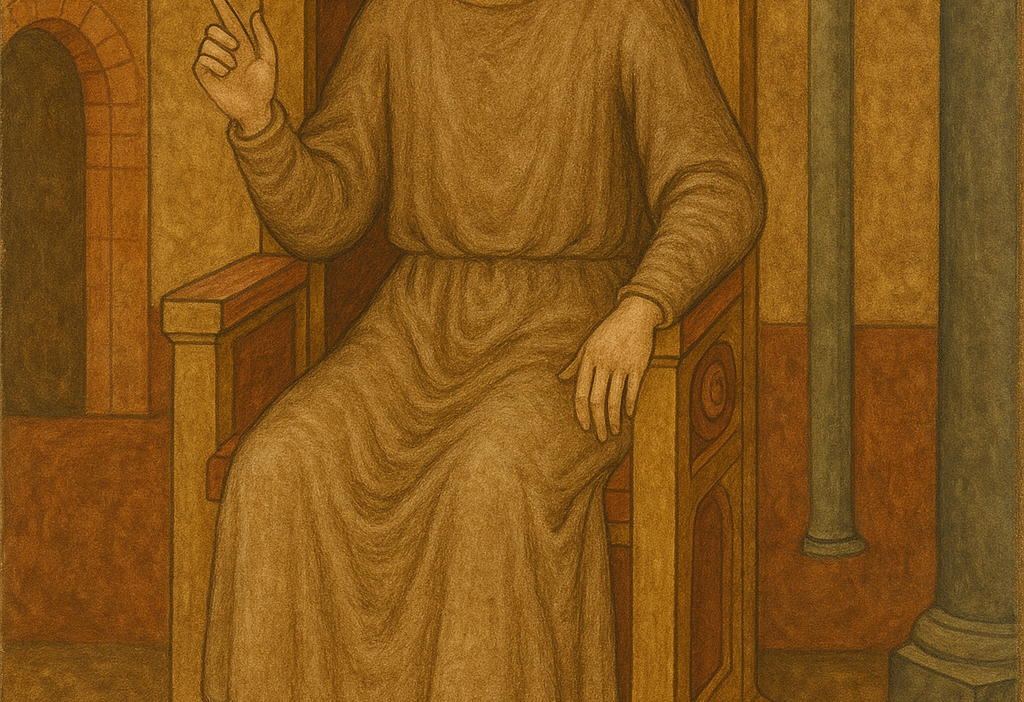
We entered upon the king in a large hall. A man was sitting on a throne, wearing a coarse shirt and coarse trousers, as if showing asceticism.
He said to the interpreter standing at his head, “What is the matter with the Muḥammadiyyīn (Muslims)?”
He replied, “I do not know.”
The king said, “Call for the priest.”
They called him, and a man arrived wearing a garment of hair, black wool trousers, and a cap of the same.
The king stood for him, kissed his feet, and seated him in his own place.
Then he said, “What is the matter with these Muḥammadiyyīn?”
The priest said, “O King, was it not the case that Jesus had twelve disciples?”
He replied, “Yes.”
The priest said, “If you heard that someone insulted one of the disciples, what would you do to him?”
He said, “I would kill him, burn him, crush him, and scatter him in the air.”
The priest said, “Muhammad likewise had ten of his Companions who were like the disciples of Jesus, who affirmed him and supported him. These Sunnis love the ten, while the others love only one of them and curse the remaining nine.”
The king then said, “Expel them! ”
And he said to his attendants, “Spit on them!”
Then he said to the Sunnis, “Do not return to speak with them; they have complained about you.”
The Sunnis said, “Were it not for your honour, we would have killed them all.”
The king said, “You would have killed them? These people are neither Muslims nor Christians nor Jews.”
taken from https://al-maktaba.org/book/31616maktaba.org/24686
Footnote
- Tyre (Ṣūr) at the time of this narrative was under Crusader Christian rule, forming part of the Latin Kingdom of Jerusalem during the 6th–7th century AH / 12th–13th century CE. Although modern readers often imagine Crusader rule as uniformly harsh, everyday life for Muslims in these territories was more complex. After the initial conquests, many Crusader rulers adopted policies of relative tolerance and administrative pragmatism, allowing Muslims to maintain communities, markets, mosques, and internal leadership. The city therefore had a religiously mixed population: Sunnis, Shīʿah, Eastern Christians, and merchants from across the Levant, who continued to live, trade, and travel through Tyre. In most cases, Muslim legal affairs were handled internally, but when disputes escalated into public disorder, they could be brought before the local Christian king, who held political authority. ↩︎