
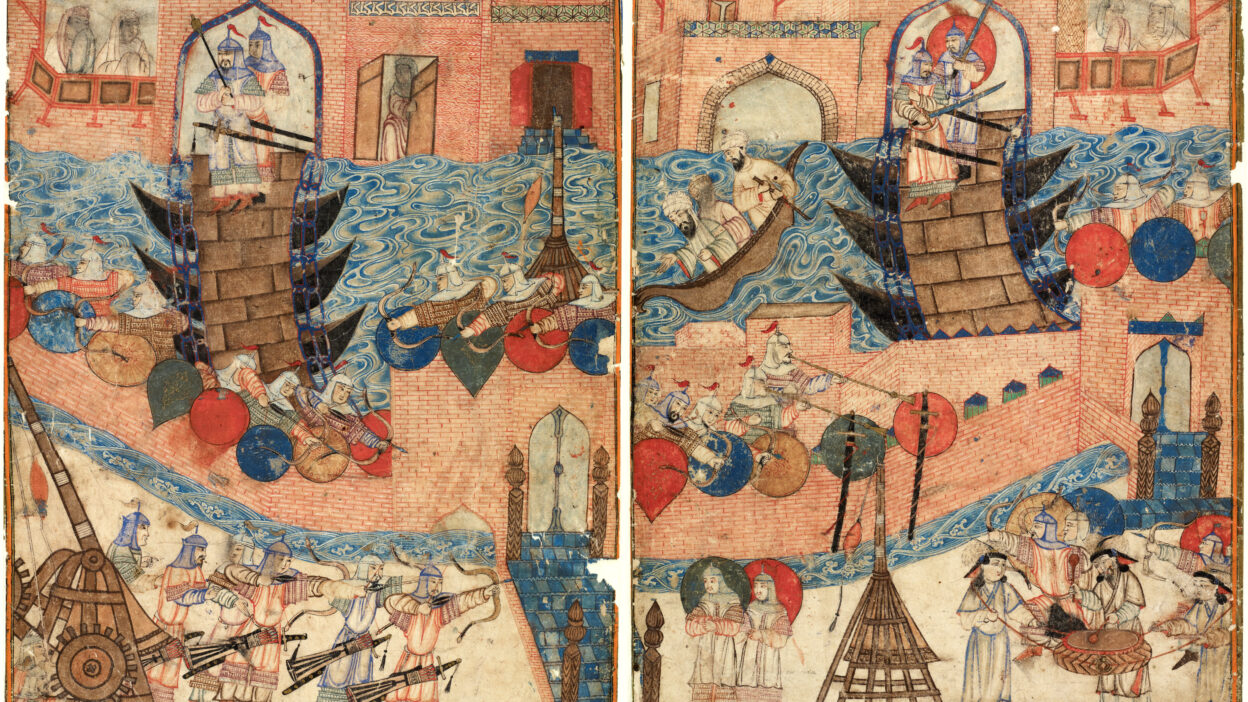
In 1258 the Mongol general Hūlākū sacked Baghdad, slaughtering over 800,000 of its inhabitants and killing the 37th and final Abbasid caliph Mustaʿṣim. This catastrophic event marked the end of the five-hundred-year Abbasid caliphate, sending shockwaves throughout the Muslim world.
This article examines the chain of events that made the fall of Baghdad not only possible but, in hindsight, almost inevitable, and the pivotal role that betrayal from within played in sealing its fate. But we begin with historical context.
The Eastern Islamic World
In the century leading up to the Mongol invasion, the Abbasid caliphate was a mere shadow of its former self. Although the Muslim world was politically fragmented, the capital Baghdad still remained the symbolic heart of the Muslim world. The caliph had limited authority and his role was often little more than ceremonial. Effective control of the state lay with the various emirs or Sultans. Nevertheless, the Caliph was still seen as a symbol of the religious unity of the umma.
Two centuries earlier, in 1055, the Seljuq sultan Tughril (r. 1037–1063) made a triumphant entry into Baghdad, sweeping aside the last of the Shīʿī Buyids and casting himself as the champion of Sunni Islam and protector of the ʿAbbāsid Caliphate. At its height, the Seljuq empire stretched from Anatolia and Syria in the west to Iran, Iraq, and the lands of Central Asia in the east. By the twelfth century, civil war raged within the Seljuks dynasty as princes and their warlord regents fought each other for control. The empire fractured into multiple Seljuq dynasties each ruling independently while nominally part of the same house. Alongside these, ambitious Turkish commanders, originally appointed as guardians of young Seljuq princes, exploited the chaos to found dynasties of their own.
This opened a window of opportunity for the caliphs. Beginning with al-Mustarshid (r. 1118–35), successive caliphs quietly rebuilt their military and financial base, until al-Nāṣir (r. 1180–1225) ruled over most of Iraq. Interestingly during this period, the Muslim rulers of Andalas and northern India pledged their allegiance to the Abbasid caliph.
In 1194, the Caliph Nāsir (r. 1180 to 1225), allied with the Central Asian Khwarazmians to defeat and kill the last Seljuq sultan, Toghrul III.¹ Almost immediately, however open hostility broke out between the Khwarazmian rulers and Baghdad. Muhammad II (r. 1200–1221) of Khwarazm marched on Baghdad in 1217, only to be turned back by a devasting blizzard in the Zagros Mountains which decimated his army. At his peak, Muhammad II ruled an empire stretching from the borders of India in the east to the Zagros Mountains on the doorstep of Iraq in the west, the mightiest power in the eastern Islamic world. Within two years of his failed march on Baghdad, that entire empire would be annihilated by Genghis Khan.
The Western Islamic World
In the West the situation was no less chaotic. In 1099, with the Seljuk successor princes fragmented and unable to mount a unified defence, the Crusaders attacked Jerusalem and slaughtered its inhabitants. Over the next two centuries, the Crusaders maintained a presence along the coastal areas of Palestine and Syria. In 1171, Saladin (r. 1171–1193) overthrew the Ismāʿīlī Fatimid counter-caliphate in Egypt, and pledged allegiance to the Abbasid caliph. Saladin then declared jihad against the Crusaders, liberating Jerusalem in 1187, and expanding his sultanate into Syria. Upon his death, his sons immediately quarrelled over the division of the Ayyubid empire. The rivalry between the Ayyubids of Cairo and Damascus became so bitter that they would at times collude with the Crusaders against their own kin. In 1229, Saladin’s nephew al-Kamil, the Sultan of Egypt handed Jerusalem back to the Crusaders.² Fifteen years later, a joint Egyptian Ayyubid-Khwarazmian force decisively defeated a coalition of Crusaders and their Ayyubid allies from Damascus. Jerusalem was to remain in Muslim hands until 1917.
The Ayyubids lost Egypt to the Mamluks in 1250 but held on to Syria. Both powers maintained a complex and often turbulent relationship with Baghdad, seeking caliphal legitimacy when it suited them whilst at times acting entirely in their own interests.
The Mongol Storm
In 1218, a Mongol trade caravan of some 450 merchants arrived at the Khwarazmian city of Otrar in modern-day Kazakhstan. The governor, suspecting spies, had them all massacred and their goods seized. When Genghis Khan (d. 1227) sent ambassadors demanding reparations, the Khwarazmian leader Ala ad-Din Muhammad executed them. For Genghis Khan, the killing of ambassadors was an unforgivable violation; for the Muslim world it was a catastrophic miscalculation.
Genghis Khan swore revenge, unleashing several armies against Khwarazm simultaneously, striking from multiple directions and preventing any coordinated defence. City after city was offered a simple choice: surrender and be spared, or resist and be destroyed. Those who resisted never lived to tell the tale. The Mongol armies destroyed the Khwarazmian Empire entirely between 1219 and 1221. The cities of Bukhara, Samarkand, Balkh, Ghazni, Merv, Nishapur, and Herat were effectively wiped out, with a death toll in the millions.
When al-Mustaʿṣim acceded to the caliphate in 1242, the ʿAbbāsid throne he inherited was already dangerously exposed. The powers that might have acted as a buffer were consumed by their own rivalries; the Mamluks and Ayyubids locked in competition to the west, the Khwarazmian rulers embroiled in conflict with Baghdad itself, making any unified Muslim resistance to the Mongols a political impossibility. That rivalry proved catastrophic. The Mongol campaign against the Khwarazmian empire, launched in 1219, had by 1231 extinguished it entirely, removing the last major barrier on the road to Baghdad.
A Weak Caliph
With the last buffer between the Mongols and Baghdad now gone, much depended on the quality of the man who sat on the caliphal throne. Historians have consistently portrayed al-Mustaʿṣim as a weak, indecisive, and naïve ruler. Al-Dhahabī writes that although he upheld the Sunna, he lacked determination and awareness, adding that “he used to play with the birds and neglect the matters of the faith, while Ibn al-ʿAlqamī was playing with him as he wished.”³ The ʿAbbāsid court had long cultivated a preference for weak caliphs, and the wazir and bureaucratic class consistently favoured rulers too weak to resist their influence.
Al-Mustaʿṣim’s uncle, al-Khafājī, had been a serious contender for the caliphate, backed by his brothers and cousins. He had reportedly declared that, were God to place him in power, he would eradicate the Mongols and reclaim the lands they had seized.⁴
Such resolve made him dangerous to those whose power depended on a compliant caliph. To forestall any challenge, the transfer of the caliphate from al-Mustanṣir (r. 1226–1242) to al-Mustaʿṣim was conducted in secrecy. ʿAbbāsid princes who showed signs of objecting were threatened with the withdrawal of food until they fell into line.
Moral Decay
The weakness at the top was mirrored by decay below. The moral fabric of the city had deteriorated considerably in the years preceding the invasion. The historian Ibn al-Athīr (d. 1233) lamented the spread of wine drinking, singing women, and prostitution through Baghdad’s streets.⁵
It was into this precarious moment that two men, one in the court of the caliph, one in the camp of the enemy, would drive the final nails.
The Two Traitors
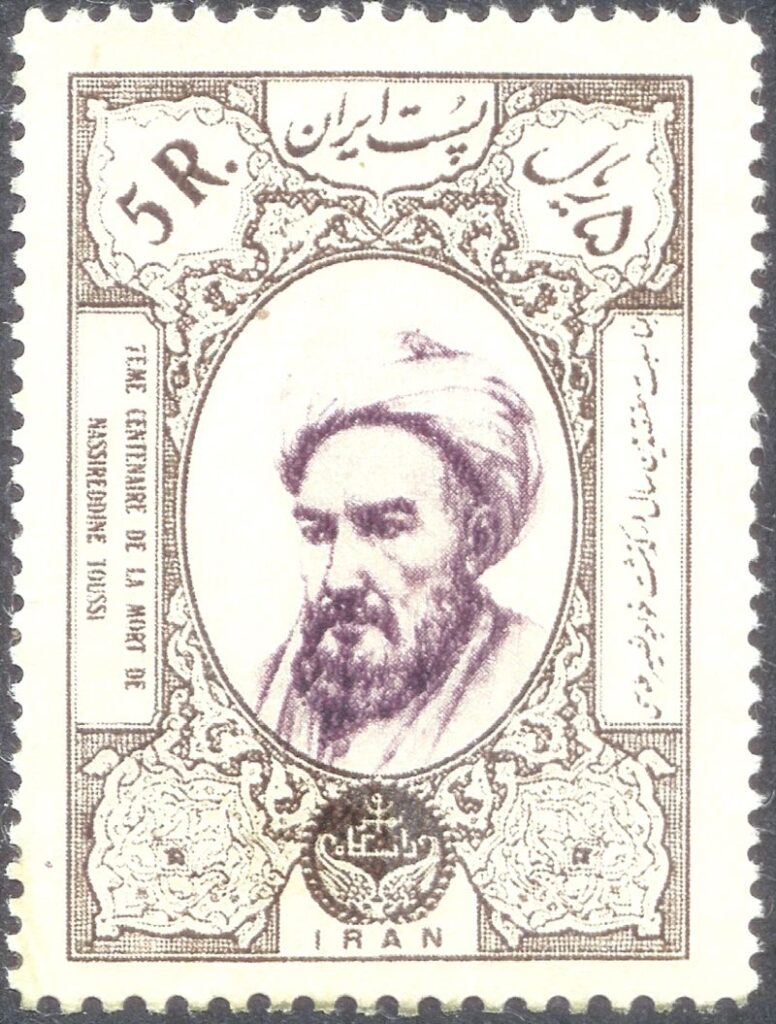
Nasir al-Din Tusi was born in Tūs, Iran in 1201 and passed away in Baghdad in 1274. A renowned Ithnā ʿAshariyya Shīʿī scholar and polymath, he excelled in philosophy, mathematics, astronomy, and theology. For many years he served the Ismāʿīlī rulers at the fortress of Alamut in northern Iran. Ibn Taymiyyah described him as someone who “did not perform religious duties such as prayers; did not care about what is forbidden by God like liquor, adultery and other crimes.”⁶ He was nevertheless held in the highest esteem among Shīʿī scholars, being honoured as the “Reviver of the Seventh Century.” After the fall of Alamut, he became a close confidant of Hūlākū and would play a central role in the destruction of the ʿAbbāsid caliphate.
Ibn Taymiyya held that the Mongol conquest of Muslim lands, and the killing of the ʿAbbāsid Caliph in Baghdad, would not have been possible without the direct collaboration of al-Ṭūsī, whom he held personally responsible for orchestrating the Caliph’s execution and the ruin of his reign.⁷
Muʾayyid al-Dīn al-ʿAlqamī (d. 1258) served as chief wazir to the Caliph al-Mustaʿṣim for fourteen years. He came from a family with a long history in ʿAbbāsid administration and had risen to become the most powerful and trusted figure in the caliphal court. The historian Ibn Taghrībirdī explained that Ibn al-ʿAlqamī had sole access to the mail and messages meant for the Caliph. He would read the messages and respond in any way he desired. He ensured that letters of warning sent by the governor of Mosul never reached the Caliph.⁸
He was recognised as a learned scholar in Ithnā ʿAshariyya Shīʿī circles. Ibn Abī al-Ḥadīd, author of the canonical Shīʿī commentary Sharḥ Nahj al-Balāghah, describes him as ‘the soldier who fought for Islam, the helper of the Dīn, the support of Islam‘; a striking tribute given what followed.⁹ The Caliph had other ministers, who were Sunnī, but the naive al-Mustaʿṣim placed his trust entirely in al-ʿAlqamī. After the destruction of Baghdad, Hūlākū assigned him authority over the city.
Both Ṭūsī and al-ʿAlqamī perceived the Mongol threat as an opportunity to bring down the Sunni caliphate. Their close association and collaboration is attested in multiple Shīʿī sources.¹⁰
Hūlākū Advances Towards Iraq
In 1251, the Great Khan Möngke dispatched his brother Hūlākū, grandson of Genghis Khan, to subdue the remaining independent powers of the Islamic world. His orders were to first destroy the Ismāʿīlī strongholds of Persia, and then turn his attention to the ʿAbbāsid Caliphate. The Caliph was to be brought to submission, and was to be attacked only should he refuse to pledge allegiance.
This was consistent with the established logic of Mongol warfare. Any city or ruler that surrendered unconditionally could expect to be spared; resistance, however, would result in the total annihilation of both people and place. The pattern was already visible across the region: the Seljuqs of Rūm, the Atabeg of Mosul, and the governors of the Zagros Mountain range had all made their accommodation with Mongol power and survived, albeit as tribute-paying vassals.
Hūlākū’s first task was to destroy the Ismāʿīlī Assassins’ castle at Alamut after Assassin agents had embarked on a campaign to kill the Great Khan. Alamut was no ordinary fortress. Perched in the mountain heights south of the Caspian Sea, it had served since 1090 as the nerve centre of the Ismāʿīlī state, a network of mountain strongholds from which the Assassins had terrorised the rulers of the Muslim world for over a century and a half, claiming the lives of caliphs, sultans, and viziers alike. When Hūlākū besieged Alamut in 1256, over forty castles across the region surrendered and were subsequently demolished. Among those who descended from the castle as part of the surrender party was Naṣīr al-Dīn Ṭūsī, who rapidly transitioned into Hūlākū’s service. Ibn al-Qayyim would later describe him as “the apostate vizier of Hūlākū.”¹¹
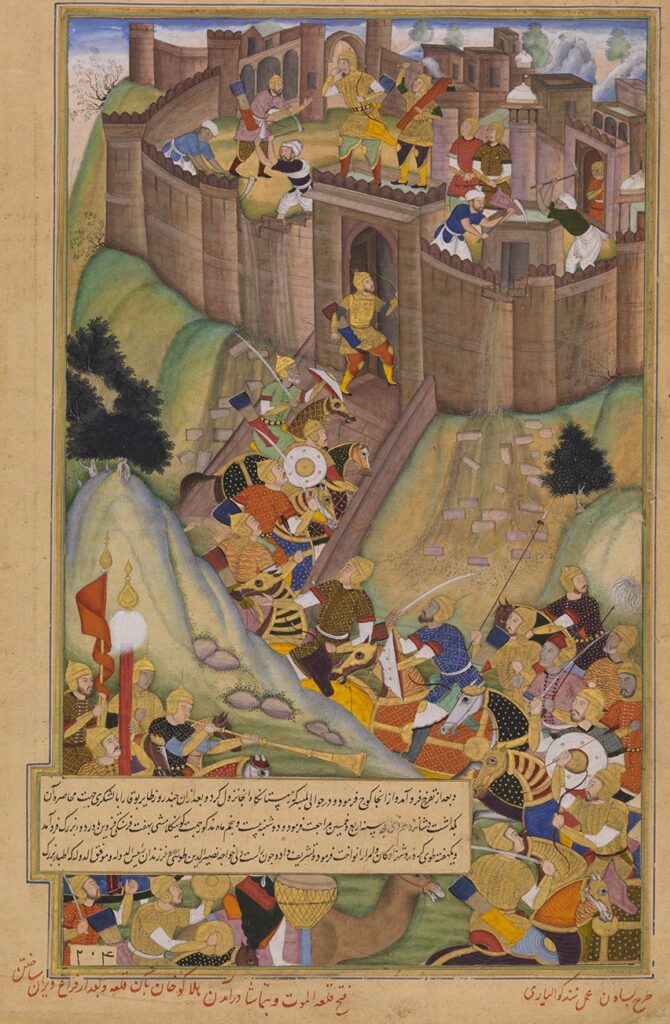
Aware of the deep animosity between the ʿAbbāsids and the Ismāʿīlīs, Hūlākū wrote to Caliph al-Mustaʿṣim requesting military assistance against them. The Caliph’s instinct was to comply, but Ibn al-ʿAlqamī persuaded him otherwise. Entrusted with composing the reply, the wazir not only refused Hūlākū’s request outright but couched the refusal in language of open contempt, dismissing Hūlākū as a “raw and inexperienced young man” who should “return whence he had come.” It was a calculated act of sabotage by a man who had already resolved to bring the caliphate down.
The Army of Baghdad Demobilized
Ibn al-ʿAlqamī’s second act of treachery was to convince the Caliph al-Mustaʿṣim to disband the army, under the pretext that military expenditures had become excessive. The Caliph foolishly agreed. The wazir then systematically summoned thousands of soldiers to court each month, discharging them, expelling them from Baghdad, and cutting off their salaries and entitlements, until only ten thousand men remained.¹²
Ibn al-ʿAlqamī further ensured that even these remaining soldiers went unpaid, reducing men who had served the seat of the Islamic caliphate to begging in the marketplaces and at the doors of mosques. Some were reduced to picking through refuse; others hired out their horses simply to survive.¹³ This is corroborated by Ibn al-Fūṭī, a student of al-Ṭūsī and a contemporary eyewitness to these events.¹⁴
The Final Ultimatum
In September 1257, Hūlākū opened correspondence with the Caliph al-Mustaʿṣim. His first letter carried an ultimatum: the Caliph must either present himself in person at the Mongol camp or dispatch a high-ranking envoy. Compliance would be rewarded and the Caliph would retain his throne, his troops, and his subjects. Ibn al-ʿAlqamī ensured that the reply caused maximum damage. The response dismissed Hūlākū as young and ignorant, and boasted that the Caliph would summon armies from across the Muslim world.¹⁵
Hūlākū’s answer was unsparing. He warned that the Caliph would be cast down from his throne, that none in his lands would be left alive, and that his cities and empire would be reduced to ash. If the Caliph had any regard for his own life and the survival of his ancient dynasty, he should submit at once — if not, he would learn the meaning of the will of God.¹⁶
Given the scale of what was bearing down on Baghdad, modern historians estimate Hūlākū’s army at between 200,000 to 300,000 men, and the utterly broken state of the caliphal forces, one course of action, however unpalatable was nominal submission in exchange for the safety of the Caliph’s position and the lives of millions of his subjects.¹⁷
Hūlākū Hesitates
Despite the Caliph’s defiant refusal, Hūlākū did not immediately march on Baghdad. He hesitated, and for two distinct reasons: one practical, one supernatural.
The practical concern
Baghdad was a vast, fortified city, and whatever damage Ibn al-ʿAlqamī had inflicted on its army, it remained formidable on paper. Prior to the disbandment, the caliphal army had stood at 100,000 men. The Mongol commander Bāyjū Nūyān, describing Baghdad to Hūlākū, warned that it had “a lot of inhabitants, a huge army, abundance of weaponry, plentiful preparations, and difficult narrow paths.”¹⁸ The historian al-Hamadhānī corroborates this, noting that Hūlākū “was concerned regarding the size of the Baghdad army.”¹⁹ Baghdad had, after all, repelled Mongol attacks before. In 1236 the Mongols had invaded Irbil, and in 1245 they had laid siege to Baghdad itself only to be driven back. Despite having no support from the wider Muslim world, the Baghdad army had defeated them unaided.²⁰
It was Ibn al-ʿAlqamī who put these concerns to rest. With the army now reduced by ninety per cent, he wrote directly to Hūlākū encouraging him to attack Baghdad and bring the ʿAbbāsid Caliphate to an end, an act of treachery recorded in both Sunnī and Shīʿī sources.²¹
The supernatural concern
Hūlākū’s court astrologer Ḥusām al-Dīn warned him in the gravest terms against attacking Baghdad. Every ruler who had raised his hand against the city and the ʿAbbāsids had lost both his kingdom and his life. He enumerated six specific natural disasters that would follow if the campaign proceeded.²² Hūlākū turned to al-Ṭūsī. He dismissed every warning. None of the predicted calamities would come to pass, he said. When Hūlākū pressed further: “what then would happen?” Al-Ṭūsī replied without hesitation: “Hūlākū will reign in place of Mustaʿṣim.” He then proceeded to cite historical cases of ʿAbbāsid caliphs killed without any subsequent catastrophe befalling their killers, extinguishing whatever remained of Hūlākū’s doubt.²³
A second account, from Mudarrisī Riḍwī’s biography of al-Ṭūsī, is even more direct. Al-Ṭūsī told Hūlākū that the stars foretold Mustaʿṣim’s imminent death and the effortless conquest of Iraq. Hūlākū needed no further persuasion.²⁴
Taken together, these accounts make clear that the fall of Baghdad was not inevitable. Al-Ṭūsī and Ibn al-ʿAlqamī had together removed every obstacle, military, political, and psychological, that stood between Hūlākū and the city. Hūlākū sent a final letter to Baghdad as the army prepared to march:
"Every man who has sincerely submitted to us can be sure of keeping his goods, his wife, his children and his life. He who resists will have nothing. The love of great things, riches, pride, the illusions of fleeting happiness have so completely seduced you that the words of well-intentioned men make no impression upon you. Now all you can do is prepare for war because I am going to march against Baghdad at the head of an army as numerous as ants and grasshoppers."²⁵
Betrayal from the South
Even before Hūlākū’s army reached the walls of Baghdad, prominent Shīʿī scholars from Ḥillah, a city some 100 kilometres to the south, had already gone to meet him. Among them were Ibn Ṭāwūs, as well as the father of the future theologian ʿAllāmah al-Ḥillī.²⁶ They came not as refugees but as envoys, sending multiple delegations to Hūlākū’s camp, pledging obedience and seeking written guarantees of protection.
The father of ʿAllāmah al-Ḥillī went further. He cited a narration attributed to ʿAlī ibn Abī Ṭālib, presenting it as a prophecy that identified Hūlākū as the foretold conqueror destined to punish Baghdad for its tyranny and corruption. In doing so, he furnished the Mongol invasion with a veneer of Islamic legitimacy at the very moment it was poised to destroy the seat of the caliphate.²⁷ The calculation paid off. Hūlākū issued written guarantees of safety for the Shīʿah of the region. When Baghdad burned, the cities of Ḥillah, Najaf, and Karbalāʾ were left entirely untouched.
The Slaughter Begins
On 29 January 1258, the assault began on all sides of the city. Rocks, palm trunks, and flaming naphtha rained down upon Baghdad. All escape routes were cut off. When a breach was opened in the eastern wall, the Mongol forces poured through. The Caliph sent message after desperate message to Hūlākū, but all in vain. The commander-in-chief of the caliphal army, who had defeated the Mongols in earlier encounters, was captured and executed along with 700 members of his household.
Ibn al-ʿAlqamī then delivered his third and final act of treachery. He counselled the Caliph to present himself before Hūlākū in person, accompanied by his family and 3,000 imams, qadis, and nobles, to offer formal surrender. To persuade him, Ibn al-ʿAlqamī fabricated an inducement; that Hūlākū wished his daughter to marry the Caliph’s son.²⁸ Assured by Ibn Alqamī of his safety, the Caliph complied. Once outside the walls, al-Mustaʿṣim and his sons were placed under Mongol guard and would never return.
Hūlākū then ordered all remaining defenders to lay down their arms and leave the city. Tens of thousands emerged in groups. The Caliph’s entourage of 3,000 imams, qadis, and nobles, who had gone out expecting to negotiate a surrender, were herded into camps alongside them and massacred. Ibn Kathīr records:
“Men of the Banū al-ʿAbbās would be called out from the house of the Caliph together with their children and womenfolk. They would be taken to the al-Khilāl graveyard, facing the watchtower, where they would be slaughtered like sheep. Girls and slaves were taken captive at will.”²⁹
Hūlākū then unleashed his forces on the city itself. For thirty days, his men killed, raped, and plundered without restraint, although Christians and Shīʿīs were spared. Ibn Kathīr describes the horror:
“They stormed the city, killing every person they laid hands on; men, women, children, the elderly, middle aged, and even adolescent ones. Many people hid for days in wells, grassy places and dirt pipes. Similarly, some groups would hide in Inns. They would secure the doors but the Tartars would manage to open them by either breaking them down or burning them. They would then flee to the roofs but the Tartars would manage to kill them there, so much so that the gutters along the streets would flow with blood. Certainly, to Allah do we belong and to Him shall we return.
The situation was similar in the masājid and the only people saved were the Jews and Christians and those who they granted asylum to, those who sought refuge in the house of the Wazīr, Ibn ʿAlqamī al-Rāfiḍī, and a group of traders who promised to pay a large amount on condition that they and wealth remain unharmed.”³⁰
Then the city was set ablaze. Masjids, markets, palaces, and thirty-six public libraries were destroyed. What had taken centuries to accumulate, irreplaceable manuscripts in medicine, astronomy, jurisprudence, poetry, and history, were destroyed in days. Much of what was lost has never been recovered. Quṭb al-Dīn al-Ḥanafī mentions: “The books were thrown into the Tigris River. Due to the large amount, it piled up and became a bridge for people and animals to cross. The water of the Tigris also turned black.”³¹
Historians estimate the death toll at 800,000. After thirty days, an amnesty was declared. Survivors emerged, in the words of one chronicler, like the exhumed dead. Many who had survived the killing then perished from the plague that swept through the ruined city.
Death of the Last Caliph
With Baghdad reduced to ash and rubble, Hūlākū faced one final decision: what to do with the Caliph al-Mustaʿṣim himself. He was warned by those around him that to spill the blood of this man would be an act of oppression against the world, that as a descendant of the Messenger of Allah (ﷺ) and His vicegerent on earth, his killing would bring about the destruction of Hūlākū’s own empire.³²
Al-Ṭūsī dismissed this concern as he had dismissed every other. No calamity had followed the killing of the Prophet Yaḥyā or of Ḥusayn, he argued. His counsel was blunt: the Caliph should be killed without his blood being spilled. Ibn Taymiyya later charged that al-Ṭūsī had not only urged the execution of al-Mustaʿṣim but had pressed Hūlākū to kill all the learned and religious men of Baghdad, while sparing only the artisans and traders who were of worldly use.³³
The Caliph was permitted one last request to perform ghusl. Hūlākū agreed but commanded five Mongol guards to accompany him. Al-Mustaʿṣim refused. “I cannot go with five Mongols from Hell accompanying me,” he said, and recited verses from a poem:
We spent the morning in a dwelling of gardens like paradise,
And we spent the night homeless as if it never existed.³⁴
He was then seized, wrapped in a sack, and kicked to death. Ibn Kathīr writes: “They kicked him to death whilst he was in a sack so that his blood would not spill onto the ground. They feared being afflicted by the retaliation they had been warned of.”³⁵ Al-Mustaʿṣim breathed his last on Wednesday evening, 14 Ṣafar 656 AH / 20 February 1258.
He was the last ʿAbbāsid Caliph of Baghdad. Almost all of the male members of his family were massacred alongside him. The women were either killed or taken into captivity. A caliphate that had endured for five centuries came to its end in a sack on a roadside outside the city it had built.
Aftermath
On 8 March 1258, Hūlākū departed Baghdad, leaving behind a city of rubble and corpses. Before leaving, he confirmed Ibn al-ʿAlqamī as wazīr of the city — the reward for fourteen years of patient treachery.³⁶ The Shīʿī scholar Muḥammad Bāqir al-Majlisī, author of Biḥār al-Anwār, made no effort to conceal his admiration: he described Ibn al-ʿAlqamī as “an admirable Shīʿī who assisted Hūlākū Khan in massacring the Caliph, taking advantage of the Mongol ruler to kill him and destroy ʿAbbāsid rule, who in return appointed him as minister.“³⁷ This is the words of a renowned senior Shīʿī authority openly celebrating the destruction of the caliphate as a sectarian victory. Ibn al-ʿAlqamī did not live long enough to enjoy it. He died a few months later, never having tasted the fruits of his treachery.
Al-Ṭūsī fared better, at least in worldly terms. He was entrusted with the administration of all religious endowments and finances across the conquered territories. In 1259, Hūlākū granted him the resources to construct an astronomical observatory at Marāghah.
Hūlākū died in 1265 and his funeral was accompanied with human sacrifices. He left behind the Ilkhanate dynasty which ruled over Iran and Iraq and much of eastern Anatolia from 1256 until its eventual dissolution in 1335. In the decades that followed, the Shīʿah grew in numbers and influence across Iraq in the post-ʿAbbāsid era. Several Mongol rulers later embraced Shīʿism.
The Doctrine Behind the Betrayal
To understand why Ṭūsī and Ibn al-ʿAlqamī acted as they did, we must look beyond personal ambition to the doctrine that made such actions not merely permissible, but righteous. The starting point is creed. A person’s creed is a complete worldview that determines loyalties, defines enemies, and provides the moral framework within which every decision is made.
Both Ṭūsī and Ibn al-ʿAlqamī were committed Twelver Shīʿīs, and their conduct during the Mongol invasion must be understood in light of this fact. In Twelver Shīʿī doctrine, not only is the authority of a Sunni leader illegitimate, the blood and wealth of Sunni Muslims is also permissible. Niʿmat Allāh al-Jazāʾirī states without qualification: “Killing them and usurping their wealth are both permissible.“³⁸ Rūḥ Allāh Khomeini, the founding father of the Shīʿī Republic of Iran, ruled that a Nāṣib (the term used by Shīʿī scholars for a Sunni) is similar to a disbelieving enemy in respect of the permissibility of usurping his wealth, adding that “it is permissible to usurp his wealth wherever it is found and by any means.”³⁹
This is confirmed with even greater bluntness by Muḥammad Bāqir al-Mūsawī al-Khuwānasārī, who records in his biography of Ṭūsī that the philosopher joined the Mongols with the explicit purpose of destroying the ʿAbbāsid empire and openly killing the followers of those he regarded as oppressors until, in al-Khuwānasārī’s own words, “their dirty blood flowed like rivers into the Tigris River, and from there into the fire of Jahannam.”⁴⁰ The wholesale massacre of hundreds of thousands of men, women, and children was, to these men, religiously sanctioned.
Bibliography
Al-Wibari, ʿAbd Allah. 2022. Shiʿah and the Fall of Baghdad. www.mahajjah.com. Most of the references to Shīʿī works were taken from here.
Boyle, J. A., ed. 1968. The Cambridge History of Iran. Vol. 5: The Saljuq and Mongol Periods. Cambridge: Cambridge University Press.
Boyle, John Andrew. 1961. “The Death of the Last ʿAbbasid Caliph: A Contemporary Muslim Account.” Journal of Semitic Studies 6 (2): 145–61.
Daiber, H., and F. J. Ragep. 2000. “Al-Ṭūsī, Naṣīr al-Dīn.” In Encyclopaedia of Islam, 2nd ed., edited by C. E. Bosworth. Leiden: Brill.
Hassan, Mona. 2016. Longing for the Lost Caliphate: A Transregional History. Princeton: Princeton University Press.
Holt, P. M., Ann K. S. Lambton, and Bernard Lewis, eds. 1995. The Cambridge History of Islam. Vol. 1A: The Central Islamic Lands. Cambridge: Cambridge University Press.
Jackson, Peter. 2017. The Mongols and the Islamic World: From Conquest to Conversion. New Haven: Yale University Press.
Kennedy, Hugh. 2016. The Caliphate. London: Pelican Books.
Luscombe, David, and Jonathan Riley-Smith, eds. 2004. The New Cambridge Medieval History. Vol. 4: c.1024–c.1198, Part 2. Cambridge: Cambridge University Press.
Marozzi, Justin. 2014. Baghdad: City of Peace, City of Blood. London.
Neggaz, Nassima. 2013. “The Falls of Baghdad in 1258 and 2003: A Study in Sunnī-Shīʿī Clashing Memories.” PhD dissertation, Georgetown University.
Waardenburg, J. D. J., and K. V. Zettersteen. 1993. “Al-Mustaʿṣim Biʾllāh.” In Encyclopaedia of Islam, 2nd ed., edited by C. E. Bosworth et al. Leiden: Brill.
Wickens, G. M. 1962. “Nasir ad-Din Tusi on the Fall of Baghdad: A Further Study.” Journal of Semitic Studies 7 (1): 23–35.
Endnotes
1. The Khwārazmians (or Khwārazm-Shāhs, c. 1077–1231) were a Turkic dynasty originating from Khwārazm, the fertile agricultural basin south of the Aral Sea in Central Asia. Their dynasty was founded by a Turkic governor appointed by the Seljuqs in the late eleventh century, who eventually broke free from Seljuq overlordship in the 1140s and built an empire of their own across Iran and Central Asia before being annihilated by the Mongol invasion of 1219–20. ↩
2. The handover was the result of the Treaty of Jaffa (1229), negotiated between al-Kāmil and Holy Roman Emperor Frederick II. Rather than a military defeat, it was a political calculation: al-Kāmil was embroiled in conflict with his Ayyubid rivals and sought Crusader backing. The treaty granted Christians control of Jerusalem, Bethlehem, and Nazareth for ten years, while Muslims retained the Haram al-Sharif. The deal was widely condemned by Muslim scholars and rulers alike. ↩
3. Al-Dhahabī, Tārīkh al-Islām, vol. 48. Cited in Neggaz, Nassima. 2013. “The Falls of Baghdad in 1258 and 2003: A Study in Sunnī-Shīʿī Clashing Memories.” ↩
4. Al-Dhahabī, Shams al-Dīn Muḥammad b. Aḥmad b. ʿUthmān, Siyar ʿAlām al-Nubalāʾ. Beirut: Dār al-Fikr, 1997, 16:426. Cited in Hassan, Mona. 2016. Longing for the Lost Caliphate: A Transregional History, pp. 27–28. ↩
5. Ibn al-Athīr, al-Kāmil, vol. VIII, pp. 342–3. Cited in Neggaz, Nassima, p. 80. ↩
6. Ibn Taymiyya, Rasāʾil, p. 97. Cited in Neggaz, Nassima, p. 333. ↩
7. Ibn Taymiyya, Rasāʾil, p. 97. Cited in Neggaz, Nassima. ↩
8. Ibn Taghrībirdī, al-Nujūm al-Zāhira fī Mulūk Miṣr waʾl-Qāhira, p. 299. Cited in Neggaz, Nassima. 2013. Ibn Taghrībirdī (c. 1411–1470) was an Egyptian historian of Turkish origin, born in Cairo into an elite Mamluk military family; his father served as governor of Egypt. He is best known for his massive chronicle al-Nujūm al-Zāhira fī Mulūk Miṣr waʾl-Qāhira (“The Shining Stars Concerning the Kings of Egypt and Cairo”), a year-by-year history of Egypt from the Arab conquest through his own lifetime. ↩
9. Muqaddamat Sharḥ Nahj al-Balāghah, 1/3. Cited in Al-Wibari, ʿAbd Allah. 2022. Shiʿah and the Fall of Baghdad. ↩
10. See Aʿyān al-Shīʿah, 9/101; Al-Fakhrī fī al-Ādāb al-Sulṭāniyya, p. 313; Biḥār al-Anwār, 64/341. Cited in Al-Wibari. ↩
11. Ighātha al-Lahfān, 2/380. Cited in Al-Wibari, p. 135. ↩
12. Al-Subkī; Ibn Kathīr; al-Kutubī, ʿUyūn al-Akhbār; al-Dhahabī, Duwal al-Islām. Cited in Al-Wibari, pp. 153–5. ↩
13. Al-Subkī, al-Ṭabaqāt, 8/262; Ibn Kathīr, al-Bidāyah wa al-Nihāyah, 13/214. Cited in Al-Wibari, pp. 153–5. ↩
14. Al-Ḥawādith al-Jāmiʿah (p. 350). Cited in Al-Wibari, p. 155. The work Al-Ḥawādith al-Jāmiʿah (“The Comprehensive Events”) was authored by Kamāl al-Dīn ʿAbd al-Razzāq ibn al-Fuwaṭī (1244–1323), a Baghdad scholar and librarian. He was a remarkable eyewitness figure: a young teenager when the Mongols sacked Baghdad, he was taken captive and later became librarian at the Marāgha observatory. The work chronicles events of the 7th AH century and is a key source for the fall of the Abbasid caliphate. ↩
15. Rashid al-Din, Jami al-Tawarikh (Compendium of Histories). Cited in Marozzi, Baghdad: City of Peace, City of Blood, pp. 136–7. Rashid al-Din Fadlallah al-Hamadani (1247–1318) was a Persian physician and historian of Jewish origin who converted to Islam and rose to become the powerful vizier of the Mongol Ilkhanid rulers Ghazan and Öljeitu. He was commissioned by Ghazan Khan to write Jāmiʿ al-Tawārīkh (Compendium of Chronicles), considered the most important single source on Mongol history. He was eventually executed on charges of poisoning the sultan and his body was dismembered and distributed across different cities. ↩
16. Rashid al-Din, Jami al-Tawarikh. Cited in Marozzi, Baghdad: City of Peace, City of Blood, pp. 135–6. ↩
17. Marozzi, Justin. 2014. Baghdad: City of Peace, City of Blood, p. 139. ↩
18. Al-Wibari, ʿAbd Allah. 2022. Shiʿah and the Fall of Baghdad, p. 155. ↩
19. Jāmiʿ al-Tawārīkh, p. 277. Cited in al-Wibari, p. 156. ↩
20. Al-Ḥawādith al-Jāmiʿah, p. 240. Cited in al-Wibari, p. 156. ↩
21. Majālis al-Muʾminīn, p. 400; Muḥākkamat al-Tārīkh, p. 29. Cited in al-Wibari, p. 139. ↩
22. The Ilkhanid historian mentioned that he was told: “All the horses will die and the soldiers will fall ill; second, the sun will not rise; third, rain will not fall; fourth, a cold destructive wind will arise, and the world will be destroyed by earthquake; fifth, the plants will not grow from the ground; sixth a great ruler will die within the year.” Rashīd al-Dīn, Jāmiʿ al-Tawārīkh. Cited in Hassan, Mona. 2016, p. 56. ↩
23. Jāmiʿ al-Tawārīkh, pp. 278–9. Cited in al-Wibari, p. 123. ↩
24. Muḥammad Taqī Mudarrisī, Al-ʿAllāmah al-Khawājah Naṣīr al-Dīn al-Ṭūsī Ḥayātuhu wa Āthāruhu. Cited in al-Wibari, p. 42. Mudarrisī is a contemporary Shīʿī scholar born in Karbala in 1945. ↩
25. Rashid al-Din, Jami al-Tawarikh (Compendium of Histories), pp. 238–9. Cited in Marozzi, Justin. 2014. Baghdad: City of Peace, City of Blood. ↩
26. ʿAllāmah al-Ḥillī (1250–1325) was the leading Twelver Shīʿī theologian and jurist of his age. Born in Hilla, Iraq, he studied under Naṣīr al-Dīn al-Ṭūsī and produced an enormous body of work spanning kalām, fiqh, and uṣūl al-fiqh. His influence on the Mongol Il-Khān Öljeitü brought Twelver Islam unprecedented political prominence. His writings attracted serious scholarly engagement from across the Muslim world, most notably from Ibn Taymiyya, whose Minhāj al-Sunna al-Nabawiyya responded at length to al-Ḥillī’s Nahj al-Ḥaqq. ↩
27. Kashf al-Yaqīn fī Faḍāʾil Amīr al-Muʾminīn. Cited in Al-Wibari, pp. 175–6. ↩
28. Al-Dhahabī, Siyar, 16:436; al-Dhahabī, Tārīkh al-Islām, 66:35–36. Cited in Hassan, Mona. 2016. Longing for the Lost Caliphate: A Transregional History, p. 30. ↩
29. Al-Bidāyah wa al-Nihāyah, 13/216. Cited in Al-Wibari, p. 22. ↩
30. Al-Bidāyah wa al-Nihāyah, 13/215. Cited in Al-Wibari, pp. 29–31. ↩
31. Riyāḍ al-Masāʾil, 2/7. Cited in Al-Wibari, p. 32. ↩
32. Ṭabaqāt al-Shāfiʿiyyah, 8/21. Cited in Al-Wibari, p. 18. ↩
33. Ibn Taymiyya, Minhāj, vol. 2, p. 99. Cited in Neggaz, Nassima. 2013, p. 331. ↩
34. Jāmiʿ al-Tawārīkh, p. 293. Cited in Al-Wibari, p. 17. ↩
35. Al-Bidāyah wa al-Nihāyah, 13/234. Cited in Al-Wibari, p. 18. ↩
36. Al-Hamadhānī, Jāmiʿ al-Tawārīkh, p. 295. ↩
37. Biḥār al-Anwār, footnote 1, 104/31. Cited in Al-Wibari, p. 141. ↩
38. Al-Anwār al-Nuʿmāniyyah, 2/307. Cited in Al-Wibari, p. 72. Niʿmat Allāh al-Jazāʾirī (1640–1701) was a prolific Twelver Shīʿī hadith scholar and jurist of the Safavid period. His teachers included al-ʿAllāma al-Majlisī and al-Shaykh al-Ḥurr al-ʿĀmil. ↩
39. Taḥrīr al-Wasīlah, 1/352. Cited in Al-Wibari, p. 72. ↩
40. Rawḍāt al-Jannāt, 1/300–301. Cited in Al-Wibari, p. 71. ↩