

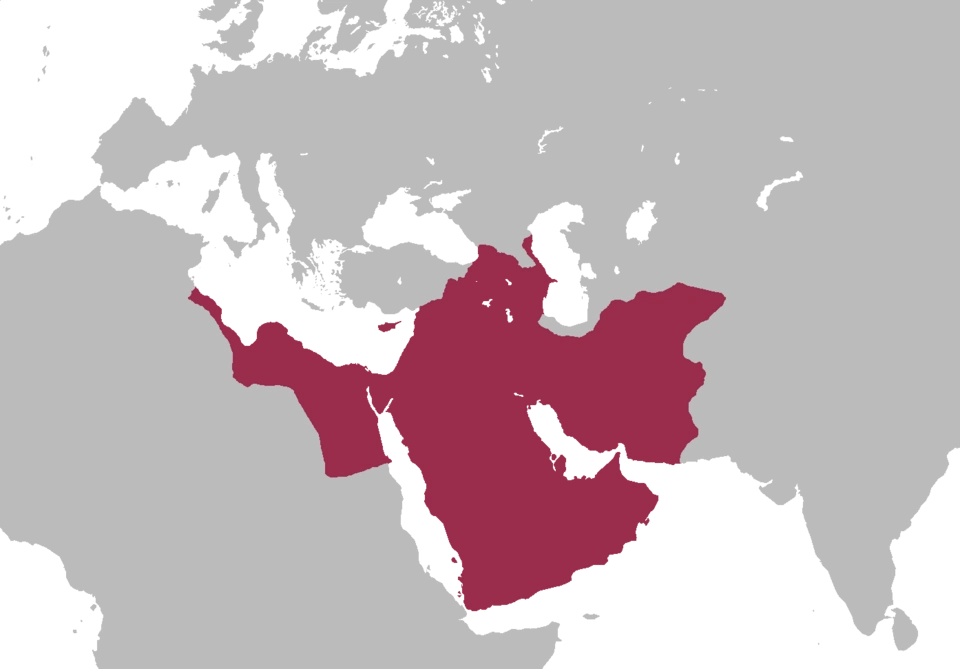
In this three part series, we examine the life of Uthman b. ‘Affan (may Allah be pleased with him), his virtues, his achievements and the events leading to his martyrdom.
Early life
Uthman b. Affan was born six years after the Prophet. In jaahilyah he was among the best of his people. He was of high status, very wealthy, extremely modest and eloquent in speech. He never prostrated to any idol, nor did he ever commit an immoral act, nor did he ever drink alcohol or listen to music. He had a very high status in Jaahiliyyah, and was well versed in lineage, proverbs and customs on non-Arabs.
- ‘Uthmān was one of the first to accept Islam, aged 34, after Abū Bakr, ‘Alī, and Zayd ibn Hārith.
- He was the first of the ummah to migrate to Abyssinia with his wife Ruqayah.
- He was one of the ten promised Paradise.
- Uthman formed a very close relationship with Prophet Muhammad, and he gained intricate knowledge about the religion of Islam. He narrated 146 traditions directly from the Prophet himself and was one of very few people who were able to write down Quran. Uthman also became a reference point for those trying to learn the rituals of worship.
- In terms of lineage, ‘Uthman closer to Prophet (salalahu alaihi wa sallam) than Abū Bakr and ‘Umar He was the Prophet’s third cousin; his lineage coincided with Prophet at ‘Abd Manāf.
His virtues
- Zuhri said: ‘Uthman supplied the army of Tabook with 940 camels, and 60 horses. He also brought 10,000 dinars (approx. 4kg of gold) to equip the army and placed the money before the Messenger of Allah (sa) and the Messenger (sa) began turning it over with his hand saying, “No deed can harm Uthman after today” twice. (Tirmidhi)
His marriage
- Because of his conversion to Islam, Uthman had to separate from his wives, who refused to accept Islam. He was grieved and distressed by this, but his love for Islam was of more value to him. The Prophet was so impressed by his sacrifice, that he married his second daughter, Ruqayya, to Uthman. However, the marriage was short lived. Ruqayya was taken ill at a time when the Muslims went to war at Badr and subsequently passed away when the Prophet and the Muslims were fighting the Quraish at the battlefield of Badr. Deeply grieved by the loss, Uthman was asked by the Prophet to marry his other daughter, Umm Kulthum. When she too passed away six years later, the Prophet noted Uthman’s grief in his manner of walking and expression on his face and said: “Had we a third daughter, surely, we would have given her in marriage to you.”
- The marriage to two daughters of the Prophet had earned Uthman the nickname Dhun-Noorayn (the one with the two lights) as there was no one else had the privilege of having the Prophet as a father-in-law twice over. In fact no man in history married two daughters of a Prophet.
His generosity
- When the Prophet (salalhu alihi wa sallam) came to Madinah he found that there was no source of fresh water in Madinah except the well of Bi’r Roomah. Before the arrival of the Prophet (salalhu alihi wa sallam), no one could drink from Bi’r Roomah except in return for payment. Roomah was a spring that belonged to a Jew who used to sell its water to the Muslims The Messenger of Allah (salalhu alihi wa sallam) said: “Who will buy Bi’r Roomah and share it with the Muslims in return for reward in Paradise?” [Bukhari]. Uthman ibn ‘Affan bought it from the Jew for twenty thousand dirhams and donated it for the rich and poor and wayfarers. (Tirmidhi)
- When the mosque became too small for the people, and the Prophet asked some of the Sahabah to buy the land next to the mosque so that the mosque could be expanded and made big enough to accommodate all the people. He said: ”Who will buy the land of so and so and add it to the mosque in return for something good for him in Paradise ?” ‘Uthman ibn ‘Affan bought it with his own money for twenty-five thousand dirhams, or for twenty thousand, then it was added to the mosque, which then became large enough to accommodate the Muslims.
Qualities unique to Uthman
- With regard to al-Hudaybiyah, Tabari mentioned a number of qualities that were exclusive to ‘Uthman. For example, he was the only one for whom the hand of the Prophet (salallahu ‘alayhi wa sallam) represented his hand, when the Sahabah swore allegiance and ‘Uthman was absent. He was the only one who conveyed the message of the Messenger of Allah to the Muslim prisoners in Makkah, and the Prophet approved of Uthman’s refusal to perform tawaf when he sent him with that message.
- ‘Aa’ishah said: The Messenger of Allah was lying down in my house with his thigh or shin uncovered. Abu Bakr asked for permission to enter and he let him in whilst he was in that state, and he spoke to him. Then ‘Umar asked for permission to enter and he let him in whilst he was in that state, and he spoke to him. Then Uthman asked for permission to enter and the Messenger of Allah sat up and straightened his garment. When he left, ‘ Aa’ishah said: Abu Bakr came in and you did not stir for him, and ‘Umar came in and you did not stir for him, then ‘Uthman came in and you sat up and straightened your garment. He said: “Should I not feel shy before a man before whom the angels feel shy?“ [Muslim]
Uthman the martyr
- The Prophet sallallahu `alayhi wa sallam once climbed the mountain of Uhud with Abu Bakr, ‘Umar and ‘Uthman radhiallahu `anhum. The mountain shook with them. The Prophet said (to the mountain), “Be firm, O Uhud! For on you there are no more than a Prophet, a Siddiq and two martyrs.” (Bukhari)
- It was narrated that Abu Moosa said: I was with the Prophet in one of the gardens of Madinah when a man came and asked for the gate to be opened. The Prophet said: “Open the gate for him and give him the glad tidings of Paradise.” I opened the gate and saw it was Abu Bakr, and I gave him the glad tidings of what the Messenger of Allah had said, and he praised Allah. Then another man asked for the gate to be opened, and the Prophet said: “Open the gate for him and give him the glad tidings of Paradise.” I opened the gate and saw it was ‘Umar, and I gave him the glad tidings of what the Messenger of Allah had said, and he praised Allah. Then another man asked for the gate to be opened, and (the Prophet) said: “Open the gate for him and give him the glad tidings of Paradise in return for a calamity that will befall him.” It was Uthman, and I told him what the Messenger of Allah had said, and he praised Allah, then he said: Allah is the One Whose help I seek. [Bukhari]
His selection as Caliph
After his fatal stabbing, ‘‘Umar chose a panel of six men to decide on his successor from among themselves. The six were: ‘Uthmān, ‘Alī, Sa’d ibn Abī Waqqās, Ṭalḥa, Zubayr and Abdur Raḥmān bin ‘Auf. When the members of the shoora council had assembled, ‘Abd al-Rahman ibn ‘Awf said to them: ‘Delegate the matter to three among you’. Al-Zubayr said: ‘I delegate my say to ‘Ali’. Talhah said: ‘I delegate my say to ‘Uthman’. Sa’d said: ‘I delegate my say to ‘Abd al-Rahman ibn ‘Awf’. So now there were three candidates: ‘Ali ibn Abi Talib, Uthman ibn ‘Affan and ‘Abd al- Rahman ibn ‘Awf. ‘Abd al-Rahman ibn ‘Awf withdrew from the contest and obtained the agreement of the others to be given authority to choose the Caliph.
‘Abd al-Rahman ibn ‘Awf began to contact people and consult for three whole days. He started with ‘Ali ibn Abi Talib, and said to him: ‘If I do not choose you, then tell me who you would nominate for caliph’. ‘Ali said: Uthman ibn ‘Affan. ‘Abd al-Rahman then went to ‘Uthman and said to him: ‘If I do not choose you, who would you nominate for caliph?’ Uthman said: ‘Ali ibn Abi Talib.
After that Ibn ‘Awf went to the other Sahabah and consulted them, and he consulted each of the senior Sahabah whom he met in Madinah, as well as the commanders of the army, and visitors to Madinah. His consultation also included women in seclusion, who expressed their views, as well as children and slaves in Madinah. The outcome of his consultation was that all of Muslims agreed upon ‘Uthman ibn ‘Affan. He announced this to Companions and made bay’a to ‘Uthmān followed by ‘Alī and then the other four. The bay’a to ‘Uthmān unanimous. Imaam Aḥmad said this was no unanimous bay’a like the one of ‘Uthmān.
In this part, we examine the achievments of Uthman during his caliphate. Uthman’s reign lasted twelve years, from 644 to 656 C.E (24H – 35H). The first six years of his reign were trouble free. Although his caliphate ended tragically, his reign can be considered successful from a number of different angles: military, religious and economic.
The military front
One of Uthman’s lasting legacy was the territorial expansion of the Muslim Caliphate. The development of a highly efficient navy contributed to this military success. News of the murder of Umar encouraged the enemies of Islam, especially the Persians and the Byzantium’s to regain the lands that the Muslims had conquered. Uthman’s first challenge as Caliph was to thwart the Byzantine counter offensives against land conquered in the time of ‘Umar. The Byzantine attack was on two fronts; against Alexandria in Egypt which they captured with very little resistance and Syria. ‘Amr bin Al ‘Ăṣ defeated the Byzantium army as it marched from Alexandria to capture Fustat. He then laid siege to Alexandria and managed to recapture the city.
Defence of Sham
The Byzantines sent 80,000 men to recapture Syria. Uthman wrote to Waleed ibn Uqba in Kūfa telling him to send reinforcements to their brothers in Syria. He sent 8,000 men and the Byzantines were repelled with the Byzantine commander killed. Following the Byzantine defeat, Mu’āwiya, the governor of Syria decided to go on the offensive. Without a naval force, the Syrian and Egyptian coasts were vulnerable to Byzantine attack. Mu’āwiya persuaded ‘Uthmān to overturn the decision of his predecessor ‘Umar, and to give permission for a naval fleet to be built. However he stipulated that no solider should be compelled to join the navy.
The conquest of Cyprus
Although Mu’āwiya did not force anyone to join him, a huge army of Muslims set out with him. In 28H, a fleet of 500 ships was sent to Cyprus. The latter was an important Byzantine naval base. Mu’āwiya wrote to the people of Cyprus calling them to Islam, stating that their aim was not to take over their island, but to secure the Muslim borders in Syria, as the Byzantines were using Cyprus as a launch pad and supply route for their armies to attack Syria.Initially the Cypriots agreed to pay the jizya and signed a treaty with the Muslims. However a few years later they broke their treaty and aided the Byzantine navy against the Muslims. Mu’āwiya launched a full-scale attack on Cyprus attacking it from the both sides killing many people and captured many prisoners.
When Cyprus was conquered Abu Darda, sat alone and cried. Jubayr ibn Nufayr approached and asked, “What makes you cry on this day in which Allah has strengthened Islam and its people?” Abu Darda replied, “Woe be to you O Jubayr. How insignificant the creation is to Allah when they abandon His commands. Between us is a nation, who were evidently strong and had dominion, they abandoned the commands of Allah, so see what has become of them!“
Six years after the construction of the first ever Muslim navy, Byzantine naval supremacy in the Mediterranean came to an end in a decisive battle known as the Battle of the Masts. The Byzantine navy of 500 ships was commanded by the Constans II against a Muslim fleet of 200. The naval encounter of the coast of southern Turkey ended in disaster for the Byzantines, and Constans fled to the island of Syracuse where he was killed by the locals.
Conquests in the East
The Eastern part of the Caliphate expanded significantly under the military leadership of Abdullah bin ‘Amir, the governor of Baṣra. After crushing an internal rebellion in Persia, he led an army to Khurāsān conquering Nīshāpūr, Harat, Merv and Balkh. The fall of Balkh ensured the whole of Khurāsān came under Muslim control. The Muslim army continued eastwards and Kabul was captured.
North Africa
A large part of North Africa was also captured in the early part of ‘Uthmān’s reign under the leadership of the governor of Egypt; Abdullah bin Sa’d. Tripoli, an important Byzantine stronghold first fell to the Muslim forces, followed by Sabetula, the capital city of the Byzantine governor Gregory. The latter was killed, and the Muslims went further west to capture Tunisa, Morocco and parts of Algeria.
The Caucasus
Northwards from Iraq, Armenia and Ădharbayjān were re-captured following a rebellion. The Muslim army pushed further north after defeating the Romans, making their presence felt in the Caucasus regions and capturing a large swathe of land west of the Caspian Sea. Thus the reign of ‘Uthman witnessed some astonishing military successes. The Islamic empire continued to expand, with the conquest of Cyprus, Anatolia, Khurasān, Afghanistan, Samarkand, Tushkent as well as Libya, Algeria, Morocco and Tunisia.
Wealth pours in
These military victories brought immense wealth to the Caliphate in the form of booty and land tax. For example, the land tax (kharaj) from Egypt alone was four million dinar. Uthman retained some, but not all of the economic policies of ‘Umar. ‘Umar had decreed that conquered land was not to be divided up amongst the army, but would remain with the local population as official state land. The local farmers paid a tax (fay’) on this land according to the income derived from it. Uthman continued this policy causing consternation among sections of the army.
However Uthman increased the stipends paid to those who had participated in the wars of conquest (ahl al fay’) by 25%. Uthman also lifted the restrictions placed by ‘Umar on the purchase of land in the conquered territories. Taking advantage of loans from the public treasury, many Companions purchased agricultural land in Iraq causing jealously among some of the local population and this resentment was later exploited by those who wished to challenge the Caliph’s authority. ‘Uthman also continued the programme of public works started by his predecessor ‘Umar, and had numerous canals dug for agricultural purposes as well as masjids, rest houses for travellers and schools.
Standardisation of the Quran
One of the greatest achievements of ‘Uthmān is his decision to unite the Muslims on a standard text of the Qur’ān. Hudayfah ibn Yamaan noticed that the disagreement about recitation of the Qur’an had emerged among the armies engaged in battle in Azerjeban. He returned to Madinah in 25H to inform Uthmaan about this alarming development, saying: ‘O Commander of the Faithful, save this ummah before it disagrees about its Book, like the Christians and Jews did before it’. (Bukhari). Ali narrated that Uthmaan assembled the Companions and said: ‘I see that we bring the people on a single mushaf, so that there is neither division nor discord’. And we said: ’an excellent proposal’
Zayd ibn Thābit was chosen to lead a committee of four Companions renowned for their scholarship of the Qur’ān, in order to make official copies from the mushhaf held by Hafsa, daughter of the late Caliph ‘Umar. Seven copies in total were made and were sent to the various regions with an official reciter. With every copy of the Qur’ān, ‘Uthman sent a qari to teach it. This was to emphasise that the recitation of the Qur’ānhad to be learnt orally through a teacher who had an authentic transmission going back to the Prophet (sallahu alaihi wa sallam). Recitation could never be solely based on the text. The script itself was in the Koofee script without nuqat and tashkeel. All other manuscripts were destroyed, and all new copies were to be made from the official copy, known as the Mushhaf ‘Uthmān. Another significant religious event in the reign of ‘Uthmān was the extension of the Prophet’s mosque in 29H.
In part two, we discuss the beginning of the fitnah that led to the unjust killing of Uthman.
Based on The Biography of Uthman Ibn Affan – Dr. Ali Muhammad Sallabi
Image: Map showing the maximum territorial extent of the Rashidun Caliphate c. 656 CE, at the end of Uthman ibn Affan’s caliphate. By Kaiser&Augustus&Imperator, CC BY-SA 4.0 via Wikimedia Commons.

.png)