
Umar ibn al-Khattab was one of the most remarkable figures in Islamic history. A fierce persecutor of Muslims before his conversion, he became the second caliph of Islam and one of its greatest defenders. This article traces his life from his harsh upbringing in Makkah, through his dramatic conversion, his unique relationship with the Quran, his wisdom and justice as caliph, and finally the story of his martyrdom in 23 AH..
Birth and description
‘Umar was born thirteen years after the Year of the Elephant. With regard to his physical characteristics, he was white with a reddish complexion, with handsome cheeks, nose and eyes, and large hands and feet. ‘Umar was muscular and taller than average, as if he was riding on a mount. He was very strong. ‘Umar was a fast walker, he spoke clearly, and when he struck, he caused pain. His father was al-Khattab ibn Nufayl. ‘Umar’s grandfather Nufayl ibn ‘Abdul-‘Uzza was one of those to whom Quraysh used to refer for judgement.
His life during the jahiliyah
‘Umar spent half of his life in the Jahiliyah, and grew up like his peers of Quraysh. However had an advantage over them in that he was one of those who had learned to read. His father al-Khattab forced him to tend his camels and treated him very harshly. ‘ Abdur-Rahman ibn Hatib mentioned: “I was with ‘Umar ibn al-Khattab in Dajnan and he said, ‘I used to tend (livestock) for al-Khattab in this place, and he was very harsh. Sometimes I would tend (the livestock) and sometimes I would gather firewood.’ ”
Sa‘d ibn al-Musayyab narrated: “ ‘Umar went for Hajj, and when he was in Dajnan he said, ‘There is no god but Allah, the Most High, the Most Great, the One Who gives whatever He wills to whomever He wills. I used to tend the camels of al-Khattab in this valley, wearing a woollen garment. He was harsh, would exhaust me when I worked and beat me if I fell short. And now here I am, with no one between me and Allah.’”
His Islam
The Prophet (salalahu alaihi wa sallam) said: O Allah strengthen Islam with the Islam of either of the two that are dearer to you. (Aḥmad)
Report 1
The first ray of the light of faith that touched his heart came on the day when he saw the women of Quraysh leaving their homeland, What caused them to leave was the persecution that they were facing from him and others. His conscience was stirred and he felt remorse and pity for them. He spoke kind words to them which they had never expected to hear from him. Umm ‘Abdullah bint Hantamah said: “When we were travelling, migrating to Abyssinia, ‘Umar, who used to persecute us mercilessly, came and said to me, ‘Are you leaving. O’ Umm ‘Abdullah?’ I said, ‘Yes, you have persecuted us and oppressed us. And by Allah we are going out in the land of Allah until Allah grants us a way out.’ ‘Umar said, ‘May Allah be with you.’ And I saw kindness in him that I had never seen before. When ‘Amir ibn Rabee‘ah, who had gone out on some errand, came, I told him about that. He asked, ‘It seems that you hope ‘Umar will become Muslim?’ I said, ‘Yes.’ He said, ‘He will not become Muslim until al-Khattab’s donkey becomes Muslim !”’
Report 2
Musnad Ahmad contains a tradition from ‘Umar, saying: Before embracing Islam one day I came out of my house with a view of causing trouble to the Holy Prophet , but he had entered the Masjid al-Haram before me. When I arrived, I found that he was reciting Surah Al-Haaqqah in the prayer. I stood behind him and listened. As he recited the Qur’an, I wondered at its literary charm and beauty. Then suddenly an idea came to my mind that he must be a poet as the Quraish alleged. Just at that moment he recited the words: “This is the Word of an honourable Messenger: it is not the word of a poet.” I said to myself: Then, he must be a soothsayer, if not a poet. Thereupon be recited the words: “Nor is it the word of a soothsayer: little it is that you reflect. It is a Revelation from the Lord and Sustainer of the worlds.” On hearing this, Islam entered deep into my heart.
‘Umar migrates to Madina
His departure
The story of migration is narrated by ‘Umar himself. He said; “When we decided to migrate we — ‘Ayyash ibn Abi Rabee‘ah, Hisham ibn al-‘As ibn Wa’il as-Sahmi, and agreed to meet at a stand of trees in an area called Ada’at Bani Ghi far above the valley of Sarif. We said, ‘If one of us does not make it there, it means that something has prevented him, and his two companions should carry on.’ ‘Ayyash ibn Abi Rabee‘ah and I met at the stand of trees, but Hisham was not able to join us. He was put to trial and succumbed.
His Companion ‘Ayyash is tricked into returning to Makkah
Umar continues:
When we reached Madeenah, we stayed among Banu ‘Amr ibn ‘Awf in Quba’. Abu Jahl ibn Hisham and al-Harith ibn Hisham came to see ‘Ayyash ibn Abi Rabee‘ah, who was their paternal cousin and their half-brother through their mother. They came to us in Madeenah when the Messenger of Allah was still in Makkah. They spoke to us and said, ‘Your mother has vowed that no comb will touch her head until she sees you, and she will not seek shade from the sun until she sees you. ’ He felt sorry for her, but I said to him, ‘O’ ‘Ayyash, by Allah, all the people want to do is to lead you astray from your religion, so beware of them. By Allah, if lice bother your mother she will comb her hair, and if the heat of Makkah becomes unbearable for her she will seek shade.’ He said, ‘I would rather respect the oath of my mother, and I have some wealth there which I am going to take.’
I said, ‘By Allah, you know that I am one of the wealthiest men of Quraysh. I will give you half of my wealth, just do not go with them.’ But he insisted on going with them, and when he insisted I said, ‘If you insist on doing that, then take this she- camel of mine, for she is well-trained and easy to ride. Stay on her back, and if you suspect that they are up to something, you can flee on her.’ So he went out with them, riding that camel. Then when they had travelled partway, Abu Jahl said to him, ‘O’ my brother, by Allah, I feel uncomfortable on this camel of mine; may I ride behind you on your camel?’ He said, ‘Yes.’ So they both made their camels kneel down, so that he could climb up behind him , but when they were both on the ground, they pounced on him and tied him up, then they took him to Makkah where they put him to trial, and he succumbed.
Allah reveals a tremendous verse
We used to say that Allah would not accept any good deed or repentance from one who succumbed one who had come to know Allah then went back to kufr because of some trial that befell him. And they used to say that to themselves too. When the Messenger of Allah came to Madeenah, Allah revealed these words concerning them:
Say, ‘O’ Ibadi who have transgressed against themselves! Despair not of the Mercy of Allah, verily, Allah forgives all sins. Truly, He is Oft- Forgiving, Most Merciful. And turn in repentance and in obedience with true Faith to your Lord and submit to Him before the torment comes upon you, [and] then you will not be helped. And follow the best of that which is sent down to you from your Lord before the torment comes on you suddenly while you perceive not!' 39: 53-55.
‘Umar sends the verses to his friends in Makkah
‘Umar ibn al-Khattab said: “I wrote these words down on a piece of paper and sent them to ‘Ayyash ibn Abi Rabee‘ah and Hisham ibn al-‘As.” Hisham said: “When it reached me, I sat down and read it in Dhu Tuwa (one of the valleys of Makkah), reading it over and over, but I did not understand it until I said, ‘O’ Allah, make me understand it.’ Then Allah caused me to understand that it had been revealed concerning us and what we used to say about ourselves and what others said about us. I went back to my camel and sat on it, and went to join the Messenger of Allah in Madeenah.”
The far-sightedness of ‘Umar
This story demonstrates to us the high degree of brotherhood that had been established by Islam. ‘Umar was willing to sacrifice half of his wealth for the sake of his brother’s safety, because he feared that he would be persecuted by the mushrikeen after he went back to Makkah. But ‘Ayyash was overwhelmed by his feelings for his mother and his desire to honour her. That’s why he decided to go back to Makkah and honour his mother’s oath, and bring the wealth that he had left there. And his self respect would not allow him to take half the wealth of ‘Umar when he had his own wealth in Makkah. But ‘Umar was more far-sighted. It is as if he could see the misfortune that would befall ‘Ayyash if he went back to Makkah. When he was unable to convince him, he gave his his well- trained camel. And the betrayal of the mushrikeen which was expected by ‘Umar did indeed befall ‘Ayyash.
Key lesson from the story of Umar’s migration
The idea had become widespread among the Muslims that Allah would not accept any good deeds from those who were put to trial and succumbed, and remained living in the jahili society. Then Allah revealed the words: Say, ‘O’ My slave] who have transgressed against themselves Despair not of the Mercy of Allah. No sooner had these words been revealed but ‘Umar hastened to write them down and send them to his two dear brothers, ‘Ayyash and Hisham, so that they would try again to escape the camp of kufr. What a sincere friend Umar had been. He had tried to persuade his brother ‘Ayyash, offering him half of his wealth to convince him not to leave Madeenah, and he had given him his she- camel so that he might flee on her. No sooner had this verse been revealed but he hastened to send it to his brothers in Makkah and to all the weak and oppressed in that city, so that they could try again to join the Muslim camp.
‘Umar’s opinion coinciding with the Qur’an.
Umar was one of the bravest and most courageous of the Sahabah. He would often ask the Messenger of Allah about his decisions if he did not understand them, and he would offer his opinion and ijtihad with all honesty and clarity. Because of his deep understanding of the aims of the Qur’an, verses of Qur’an were revealed which coincided with his opinion in some instances.
‘Umar said: “My opinion coincided with that of Allah in three matters. I said, 0’ Messenger of Allah, why don’t you take Maqam Ibraheem as a place of prayer?’, then Allah revealed that.
I said, ‘O’ Messenger of Allah, both righteous and immoral people enter upon you; why don’t you tell the Mothers of the Believers to observe hijab and Allah revealed the verse of hijab.
And I heard that the Prophet had rebuked some of his wives, so I went to them and said, ‘Either you stop, or Allah will give His Messenger (wives) who are better than you.’ I went to one of his wives and she said, ‘O’ ‘Umar, don’t you think that the Messenger of Allah is able to exhort his wives? Why are you speaking to them?’ Then Allah revealed the words: It may be if he divorced you [all] that his Lord will give him instead of you, wives better than you — Muslims, believers, obedient, turning to Allah in repentance, worshipping Allah sincerely, given to fasting, previously married and virgins. (Qur’an 66: 5)
Not offering the funeral prayer for the hypocrites
The hypocrites were those individuals who falsely embraced Islam with a view benefiting from the protection afforded to them as Muslims, but at the same time, harbouring enimity and hatred towards Islam and the Muslims. Their crimes are to many to be enumerated but they include:
- 300 hypocrites deserting the army before the battle of Uḥud,
- abandoning jihad whenever they could.
- ridiculing Prophet and believers,
- slandering ‘Āisha (may Allah be pleased with her)
- building Masjid Al-Dirar built to cause division among the Muslims
- trying to cause argumentation and division amongst Companions,
- accusing the Prophet of being unjust,
- co-operating with kuffar against Muslims.
‘Umar said: “When ‘Abdullah ibn Ubayy died, the Messenger of Allah was called to offer the funeral prayer for him. He went there and when he stood to offer the prayer for him, I went and stood in front of him and said: “O’ Messenger of Allah, are you going to offer the funeral prayer for the enemy of Allah ‘Abdullah ibn Ubayy, who said such and such on such and such a day?” and I listed his evil deeds, whilst the Messenger of Allah smiled, until I had said too much. Then he said,
“Leave me, O’ ‘Umar, for I have been given the choice and I have made my choice. It was said to me, Whether you ask forgiveness for them [hypocrites] or ask not forgiveness for them — [and even] if you ask seventy times for their forgiveness — Allah will not forgive them because they have disbelieved in Allah and His Messenger [Muhammad], And Allah guides not those people who are Fasiqoon (Qur’an 9: 80). If I knew that by asking more than seventy times for his forgiveness he would be forgiven, I would ask more than seventy times.”
Then he offered the funeral prayer for him and accompanied him to his grave, until the burial was finished. I started to wonder at my own audacity in speaking to the Messenger of Allah in this manner, but Allah and His Messenger knew best. It was not long before this verse was revealed: And never pray [funeral prayer] for any of them [hypocrites] who dies, nor stand at his grave…*? (Qur’an 9: 84) After that the Messenger of Allah did not offer the funeral prayer for any hypocrite, nor did he stand at his grave, until Allah took his soul.
The prisoners of Badr
‘Umar said: “On the day of Badr, when Allah defeated the mushrikeen and seventy of them were killed and seventy taken prisoner, the Messenger of Allah consulted Abu Bakr, ‘Umar, ‘Uthman and ‘me. He said to me: “What do you think, O’ son of al-Khattab?” I said:
“I think that you should let me deal with so and so, a relative of ‘Umar’s, and I will strike his neck. And you should let ‘Ali deal with ‘Aqeel and strike his neck. And you should let Hamzah deal with so and so and strike his neck, so that Allah will know that there is no inclination in our hearts towards the mushrikeen, for these are their leaders and chiefs.”
The Messenger of Allah did not like what I said, and he accepted the ransom from them. The next day I went to the Messenger of Allah and he and Abu Bakr were sitting there, weeping. I said, “O’ Messenger of Allah, what has made you and your Companion weep? If I can, I will weep with you, and if I cannot then I will pretend to weep.” The Messenger of Allah said, “Because of what your companions suggested of accepting the ransom, your punishment was shown to me closer than this tree.” Then Allah revealed the words:
It is not for a Prophet that he should have prisoners of war [and free them with ransom] until he had made a great slaughter in the land. You desire the good of this world [ransom money], but Allah desires for you the Hereafter. And Allah is All-Mighty, All-Wise. Were it not a previous ordainment from Allah, a severe torment would have touched you for what you took! (Qur’an 8: 67-68)
Umar and his prayer that alcohol be forbidden
When Allah revealed the verse: They ask you [O’ Muhammad] concerning alcoholic drink and gambling...(Qur’an 2: 219) ‘Umar said: “0’ Allah, clarify the issue of alcohol for us once and for all.” Then the verse in Soorah an-Nisa’ was revealed: O’ you who believe! Approach not as-Salah when you are in a drunken state…. (Qur’an 4: 43)
When giving the iqamah, the caller of the Messenger of Allah would cry out that no drunken person should approach the prayer. ‘Umar was called, and this verse was recited to him, and he said:
“O Allah, clarify the issue of alcohol for us once and for all.”
Then the verse in Soorah al-Mad’idah was revealed, Satan only wants to cause between you animosity and hatred through intoxicants and gambling and to avert you from the remembrance of Allah and from prayer. So will you not desist? and ‘Umar was called and it was recited to him. When he reached the words, So, will you not then abstain? (Qur’an 5: 91). ‘Umar said, “We have abstained, we have abstained. ”So the prohibition of alcohol was approached in a gradual manner, and from the words So, will you not then abstain? (Qur ’an 5: 91). ‘Umar understood that this rhetorical question was in fact a prohibition, because this question was more powerful and more definitive than a prohibition expressed in the usual style.
The Shaytan was afraid of him
Sa‘d ibn Abi Waqqas said: ‘Umar ibn al-Khattab sought permission to see the Messenger of Allah. There were some women of Quraysh with him who were talking to him. They were asking too many questions, raising their voices above his . When ‘Umar ibn al-Khattab asked for permission to enter, they ran and hid. The Messenger of Allah gave him permission to enter, so ‘Umar came in and found the Messenger of Allah smiling. He said, “May Allah make you smile always. O’ Messenger of Allah.” The Prophet said, “I am surprised about these women who were with me. When they heard your voice, they ran and hid. ” ‘Umar said, “You have more right to be feared by them. O’ Messenger of Allah.” Then ‘Umar said, “O’ enemies of yourselves! Do you fear me and not the Messenger of Allah?” They said, “Yes, you are more harsh and more stern than the Messenger of Allah.” The Messenger of Allah said, “O’ son of al-Khattab, by the One in Whose hand is my soul, the Shaytan never meets you on a path but he takes another path“. (Bukhari)
“You are just a stone; you do not cause harm or bring benefit”
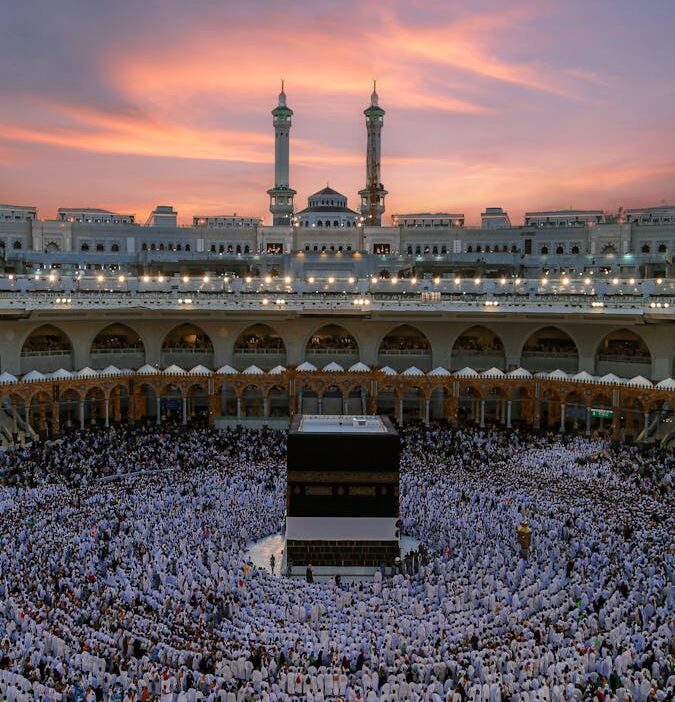
It was narrated from ‘Abis ibn Rabee‘ah that ‘Umar came to the Black Stone and kissed it, then he said: “I know that you are just a stone; you do not cause harm or bring benefit. If I had not seen the Prophet kiss you, I would not have kissed you.”
At-Tabari said: “ ‘Umar only said that because the people had only recently given up idol worship. He was afraid that the ignorant might think that acknowledging the stone was a kind of veneration of stones, which is what the Arabs used to do during the Jaahiliyah. ‘Umar wanted it to be known that acknowledging the stone was following the action of the Prophet .”
Then Ibn Hajar said: “These words of ‘Umar represent submission to the Lawgiver in matters of religion, and following (the Sunnah) in the proper manner where the reason is not explained. This is an important principle in following the Prophet in matters where one does not know the wisdom behind it.” This attitude — following the Sunnah and being eager to do so — is one of the factors in the success of the Sahabah. They knew that it was essential to follow the Sunnah so that Allah would grant them help and support.
Cutting down the tree of al-Ridwan
Ibn Sa‘d narrated with a saheeh isnad from Nafi‘ that ‘Umar heard that some people were going to the tree of ar-Ridwan and praying there. He warned them, then he ordered that it be cut down, and it was cut down. This was ‘Umar’s attitude in defending Tawheed and eradicating the causes of fitnah when those Tabi ‘een did something that the Sahabah had never done. This was an innovation, which may have led to them worshipping that tree later on, so he ordered that it be cut down.
The grave of Prophet Daniel (alaihi salaam)
The scholars of history have stated that Daniyal was one of the Israelite Prophets. He lived at the time of Nebuchadnezzar, who destroyed Bayt al-Maqdis , killed many of the Children of Israel, and burned the Torah. They said that he foretold the coming of our Prophet Muhammad . Shaykh al-Islam Ibn Taymiyah said: “Daniyal mentioned Muhammad the Messenger of Allah by name and said: “Arrows will be departing from bows and arrows will be stained with blood at your command, O Muhammad.”
When the grave of Prophet Daniel was discovered in Tastar, Abu Moosa wrote to ‘Umar ibn al-Khattab about it. ‘Umar wrote back, telling him: “Dig up thirteen graves during the day, then bury him in one of them during the night and raze his grave, lest the people be tempted or confused by that.”
The wisdom and motive behind ‘Umar’s action were the following three hadeeth:
- He (sallallahu alaihi wa-sallam) also said: “The most evil of mankind are those who will be alive when the Last Day arrives and those who take graves as places of worship.” Musnad Ahmad Ibn Ḥanbal
- Beware that those before you took the graves of their Prophets as places of worship. Do not take graves as places of worship, for verily I forbid you to do so.”[Muslim]
- As Allah’s Messenger (sallallahu alaihi wa-sallam) was about to breathe his last, he drew his sheet upon his face and when he felt uneasy, he uncovered his face and said in this very state: “May Allah’s curse be upon the Jews and Christians for taking the graves of their Prophets as places of worship.” (Bukhari).
Dealing with people who spread doubts about the religion
Clear and Ambigious Verses
Even though innovation hadn’t raised its ugly head in the time of ‘Umar bin al-Khattab, he was well aware of the dangers of pursuing the unclear verses.
“It is He Who has sent down to you the Book (this Qur’an). In it are Verses that are entirely clear (muhkamaat), they are the foundations (umm) of the Book and others not entirely clear (mutashaabihaat). So as for those in whose hearts there is a deviation they follow that which is not entirely clear thereof, seeking Al-Fitnah, and seeking for its ta’weel…” .
The Messsenger (sallallaahu alaihi wasallam) said: “When you see those who follow what is unclear (in the Book), then they are the very ones that Allah has named (in this verse) so beware of them.”
Allah mentions that certain verses of the Qur’an that are muhkam, i.e. entirely clear in meaning. These verses do not require anything besides it to explain its meaning. These clear verses are the foundation (umm) of the Quran.
Other verses in the Quran are mutashabihaat – i.e. they requires something else to explain its meaning. In some cases, a mutashabihaat verse carries a number of meanings, and we can only understand its correct meaning in light of other verses and ahadith. Regarding such verses, it is upon the Muslim that he believes in them and that they should be referred back to what is muhkam (clear and decisive). The deviants seek the ambiguous verses and leave the clear verses.
‘Umar applies these verses
A man called Sabeegh bin ‘Asl was spreading doubts among the people regarding certain verses from the Qur`an. He began to ask about the mutashaabih (unclear) from the Qur’aan. So ‘Umar had him brought in so that he could hit him and put him in prison. Then ‘Umar brought Sabeegh again, hit him, and sent him back to prison. And then, on the third time, Sabeegh said, “O leader of the believers. If you want to kill me, then do it in a good way, and if you wanted to remove that which was in my head [evil], then by Allah, they have left.” So Umar allowed him to return to Iraq and wrote to Abu Musa Al-Ashari that no one from the Muslims should sit with him. Abu Uthman said: ‘Umar wrote to us not to sit with him, and if we were a hundred in a gathering and he sat with us, we would all stand and disperse from him. So this was the punishment for spreading doubts and confusion about the Quran. And the example of Umar was followed by scholars throughout history; they would avoid sitting with the callers to innovation.
Will you carry my burden for me on the Day of Resurrection?
Aslam the freed slave of ‘Umar, narrated that “ ‘Umar went out to Harrat Waqim , and I went with him. When we were in Sarar , we saw a fire burning. He said, ‘O Aslam, I see here some travellers who are being held up by the night and the cold; let’s go.’ So we went running and when we came near to them, we saw a woman with children. There was a pot set up over the fire, and her children were crying. ‘Umar said, ‘Peace be upon you. O’ people of the light (he did not want to say. O’ people of the fire).’ She said. ‘And upon you be peace.’ He said, ‘May I come closer?’ She said, ‘Come if you can do some good; otherwise, leave us alone.’ He came closer and said, ‘What is the matter with you?’ She said, ‘The night and the cold held us up.’ He said, ‘What is the matter with these children; why are they crying?’ She said, ‘They are hungry.’ He said, ‘What is in this pot?’ She said, ‘Water, to calm them down until they go to sleep, and Allah will judge between us and ‘Umar.’ He said, ‘May Allah have mercy on you, how could ‘Umar know about you?’ She said, ‘How come he is in charge of our affairs, but he is not aware of our situation?’ He turned to me and said, ‘Let’s go.’ So we set off running until we came to the room where wheat was stored. He took out a sack of wheat and a little fat, and said, ‘Hoist it up onto me.’ I said, ‘I will carry it for you.’ He said, ‘Will you carry my burden for me on the Day of Resurrection, may you be bereft of your mother?’ So I hoisted it up onto him and he set out running and I ran with him. When he reached her, he put those things down. He took out some of the wheat and said to her, ‘Prepare it for me and I will cook it for you. ’ He started blowing beneath the pot and I saw the smoke coming out through his beard. He cooked it for her, and brought it to her, and said, ‘Bring me something.’ So she brought him a vessel and he poured it into it, then said, ‘Feed them and I will spread it out (to cool down) for them.’ He stayed until they had eaten their fill, and he left the leftover food with her. He got up, and I got up with him, and she started to say, ‘May Allah reward you with good; you are more suited to be the caliph than Ameer al-Mu ’mineen .’ He said, ‘Say something good, and if you go to the Ameer al-Mu ’mineen , you will find me there insha’ Allah.” Then he walked some distance away from her. He turned to face them again and waited a while. I said to him, ‘Is there anything else?’ but he did not answer me, until I saw the boys wrestling then falling asleep, having calmed down. Then he stood up and said, ‘Praise be to Allah, the Exalted, the Almighty.’ He turned to me and said, ‘O’ Aslam, hunger kept them awake and made them cry; I did not want to leave until I saw what I saw .’”
The hijri calendar
This development had a major cultural impact. The first one to introduce this system was ‘Umar. There are several reports which speak of the reason for that. It was narrated that Maymoon ibn Mahran said: “A document that was dated in Sha‘ban came to Umar, and he said, “Is this Sha‘ban of last year, or Sha‘ban of the coming year, or the Sha‘ban we are in now?” Then he gathered the Companions of the Messenger of Allah and said to them, “Set up something for the people that they can refer to.” Someone suggested using the Byzantine calendar, but it was pointed out that it was too long as they dated it from the time of Dhu al-Qamayn. Someone else suggested using the Persian calendar, but they said that every time a new king came along, he abolished what had gone before. Then they agreed to look at how long the Messenger of Allah had stayed in Madeenah, and they found that he had stayed there for ten years, so they based their calendar on the Hijrah of the Messenger of Allah.
It was narrated that ‘Uthman ibn ‘Ubaydullah said that he heard Sa‘eed ibn al-Musayyib say: “ ‘Umar ibn al-Khattab gathered the Muhajireen and Ansar together and said, ‘From when should we date our history?’ ‘Ali ibn Abi Tālib said to him, ‘From the time when the Prophet came out of the land of shirk’ i.e., from the day he migrated. So ‘Umar ibn al-Khattab adopted that date for the beginning of the calendar.” And it was narrated that Sa‘eed ibn al-Musayyib said: “The first one to establish the calendar was ‘Umar ibn al-Khattab , two and half years into his caliphate. He reached a decision in consultation with ‘Ali ibn Abi Talib .”
His martyrdom
The narration of ‘Amr ibn Maymoon
‘ Amr ibn Maymoon said: “I was standing with no one between me and him but ‘Abdullah ibn ‘Abbas on the day when he was struck. When he passed between the rows, he would say, “Make (your rows) straight,” and when they were straight, he would go forward and say takbeer , and he would recite Soorah Yoosuf or an-Nahl, or a similar Soorah in the first rak‘ah, until all the people had gathered. No sooner had he said the takbeer, but I heard him say, “The dog has killed me!” when he was stabbed. The foreigner (non-Arab infidel) tried to flee, wielding a two-edged knife, and he did not pass by anyone, right or left, but he stabbed him. He stabbed thirteen people, of whom seven died. When one of the Muslim men saw that, he threw a cloak over him, and when the foreigner realized that he had been caught, he killed himself. ‘Umar took the hand of ‘Abdur-Rahman ibn ‘Awf and made him go forward to lead the people in prayer. Those who were immediately behind‘Umar saw what had happened; those who were in other parts of the mosque did not realize, but they missed ‘Umar’s voice, and they were saying, “Subhan-Allah.” ‘Abdur-Rahman led them in a brief prayer, and when they finished, ‘Umar said, “O’ Ibn ‘Abbas, see who killed me.” He went around for a while, then he came and said, “It was the slave of al-Mugheerah.” He asked, “The craftsman?” He said, “Yes.” He said, “May Allah curse him. I told his master to treat him well. Praise be to Allah, Who has not caused my death to be at the hands of a man who claimed to be a Muslim. You and your father (meaning al-‘Abbas and his son, ‘‘‘Abdullah) — wanted to bring more infidel foreigners to Madeenah!” Al-‘Abbas was the one who had the most slaves, and ‘Abdullah said, “If you wish (we will kill them).” ‘Umar said, “No, that is wrong, after they have learned your language and started to pray facing your qiblah, and performed Hajj as you do.”
‘Umar was carried to his house, and we set off with him, and it was as if no calamity had ever struck the people before. Some nabeedh was brought to him and he drank it, but it came out from his stomach. Then some milk was brought to him and he drank it, but it came out through his wound. They realized that he was dying, so we entered his house and the people came and started praising him. He said: “O’ ‘Abdullah ibn ‘Umar, see what debts I owe.” They worked it out, and the total came to eighty-six thousand or thereabouts. He said, “If the family of ‘Umar can afford it, pay it off from what you collect from them. Otherwise ask Banu ‘ Adiyy ibn Ka‘b, and if their wealth is not enough then ask Quraysh, but do not go to anyone else after them. Pay off this money on my behalf. And go to ‘A’ishah, the Mother of the Believers, and say, “ ‘Umar sends you greetings of peace. Do not say Ameer al-Mu’mineen , for today I am no longer the leader of the believers. Say, ‘Umar ibn al-Khattab is asking for permission to stay with his two companions.” ‘Abdullah ibn ‘Umar said salam and asked permission, then he went to her and found her sitting weeping. He said, “Umar ibn al-Khattab sends you salams and is asking for permission to be buried with his two companions.” She said, “I had wanted it for myself, but today I will give it up for him.” When he came back, it was said, “Abdullah ibn ‘Umar has come.” ‘ ‘Umar said, “Lift me up.” So a man helped him to sit up and he asked, “What news do you have?” He said, “That which you want to hear. O’ Ameer al-Mu’mineen. She has given permission.” He said, “Praise be to Allah, nothing was worrying me more than that. When I pass away, carry me there and say: “ ‘Umar ibn al-Khattab is asking permission to enter. When permission is given to me, carry me in, but if she says no, then take me to the graveyard of the Muslims.” When he died, we took him out and set off walking. ‘Abdullah ibn ‘Umar said salam and said, “Umar ibn al-Khattab is seeking permission to enter.” ‘A’ishah said, “Bring him in.” So he was brought in and placed there with his two companions .
Other reports
Some reports describe in detail the events that are not mentioned in the report of ‘Amr ibn Maymoon. Ibn ‘Abbas said: “ ‘Umar was stabbed before dawn by Abu Lu’lu’ah, the slave of al-Mugheerah ibn Shu‘bah, who was a Magian .” Abu Rafi‘ said, “Abu Lu’lu’ah was a slave of al-Mugheerah ibn Shu‘bah, and he used to make grindstones. Al-Mugheerah used to deduct four dirhams from him every day. Abu Lu’lu’ah met ‘Umar and said, ‘O ’ Ameer al-Mu’mineen, al-Mugheerah is taking too much from me; ask him to reduce it.’ ‘Umar said, ‘Fear Allah and be good to your master.’ ‘Umar intended to speak to al-Mugheerah and ask him to reduce it, but the slave got angry and said, ‘His justice extends to all of them except me. ’ So he planned to kill him. He made a two-headed dagger, sharpened it and put poison on it, then he showed it to al-Hormuzan, and asked, ‘What do you think of this?’ He said, ‘I do not think you will strike anyone with it but you will kill him .’ Then Abu Lu’lu’ah waited for an opportunity to strike ‘Umar. He came to him at the time of Fajr prayer and stood behind ‘Umar. As was his habit, when the iqamah for prayer was given ‘Umar spoke to the people and told them to straighten their rows, then when he said the takbeer, Abu Lu’lu’ah stabbed him in the shoulder and then in his side, and ‘Umar fell down .” ‘Amr ibn Maymoon said: “When he was stabbed, I heard him say, And the Command of Allah is a decree determined.
Forbidding the evil – even when dying
A young man came to ‘Umar after he was stabbed and told him: “O leader of the believers, you have glad tidings from Allaah, as you accompanied the Prophet sallallaahu `alayhi wa sallam and you are a senior in Islam, and then you were appointed as a caliph and you ruled with justice, and finally, you are blessed with martyrdom.” … Then ‘Umar : “I wish I would meet Allaah breaking even.” And when the young man departed away ‘Umar noticed that his lower garment was touching the ground. So, he asked people to call him and said to him: “O son! Raise your garment as, it is cleaner to your garment and reflects consciousness of Allaah.” [Al-Bukhari] The narration is evidence that he was keen on adhering to the Sunnah and warning people against neglecting it, and he advised the young man even in this very last moments of his life. (Bukhari)
The final moments
Ibn ‘Abbas described die final moments in the life of ‘Umar when he said: “I entered to see ‘Umar when he had been stabbed, and said, ‘Receive the glad tidings of Paradise, O’ Ameer al- Mumineen , for you became Muslim when the people disbelieved, and you strove in jihad with the Messenger of Allah when the people let him down. The Messenger of Allah died when he was pleased with you, no one disputed your appointment as caliph, and you have been killed as a martyr.’ ‘Umar said, ‘Say it again.’ So I repeated it to him, and he said, ‘By Allah, besides Whom there is no other god, if I had all the gold and silver in the world, I would pay it to avoid the terror of what comes after death.’”
According to a report narrated by Bukhari, “As for what you have said about having been a Companion of the Messenger of Allah and his having been pleased with me, that is a blessing that Allah has bestowed upon me. As for what you see of my worry, that is because I am worried about you and your companions. By Allah, if I had an earthful of gold, I would use it to ransom myself from the punishment of Allah before I saw it.”
‘Umar’s fear of Allah
‘Umar was profoundly afraid of the punishment of Allah even though the Prophet had testified that he was bound for Paradise; despite that he made great efforts to establish the rule of Allah and justice, was a great ascetic, engaged in jihad and did other righteous deeds. This offers an important lesson to the Muslims in general, that they should remember the stem punishment of Allah and the terrors of the Day of Judgement.
‘Uthman tells of the last moments in the life of ‘Umar, as he says: “I was the last of you to see ‘Umar. I entered to see him and his head was resting in the lap of his son ‘Abdullah ibn ‘Umar. He said to him: “Lay my cheek upon the ground.” He said, “Is there any difference between my thigh and the ground?” He said, “Lay my cheek on the ground, may you be bereft of your mother,” the second or third time. Then he crossed his legs and I heard him say, “Woe to me and woe to my mother if Allah does not forgive me,” then his soul departed.
This is an example of ‘Umar’s characteristic fear of Allah, for his last words were words of woe against himself if Allah did not forgive him, even though he was one of the ten who had been given the glad tidings of Paradise. But the one who knows more of Allah fears Allah more. His insistence that his son lay his cheek on the ground was a kind of humbling himself in order to glorify Allah, because that would be more likely to bring a response to his du‘a’. This shows us how much his heart was focused on Allah.
Adh-Dhahabi said: “He was martyred on a Wednesday, the twenty-sixth or twenty-seventh of Dhu al-Hijjah 23 A.H., and he was sixty-three years old according to the correct view.” His caliphate lasted a little more than ten and a half years . In Tareekh Abi Zar ‘ah it is narrated that Jareer al-Bajali said: “I was with Mu‘awiyah and he said, ‘The Messenger of Allah (jig) died when he was sixty-three years old, and Abu Bakr died when he was sixty-three years old, and ‘Umarwas killed when he was sixty-three years.
His Janaza
Adh-Dhahabi said that Suhayb ibn Sinan offered the prayer for him. Ibn Sa‘d said: “ ‘Ali ibn al-Husayn asked Sa‘eed ibn al- Musayyib, ‘Who offered the funeral prayer for ‘Umar ?’ He said, ‘Suhayb.’ He said, ‘How many takbeers did he say?’ He said, ‘Four.’ He asked, ‘Where was the prayer offered?’ He said, ‘Between the grave and the minbar.’” Ibn al-Musayyib said: “The Muslims looked and saw that Suhayb was leading them in the obligatory prayers, on the instruction of ‘Umar, so they made him lead the funeral prayer for ‘Umar.” ‘Umar did not appoint any of the six candidates for the caliphate to lead the prayer, lest that be seen as an endorsement of that man by ‘Umar.
His burial
Adh-Dhahabi said: “He was buried in the room where the Prophet was buried. Ibn ‘Abbas said: “ ‘Umar was placed on his bed and the people surrounded him, praying for him before he was lifted up, and I was among them. Suddenly I felt a man taking hold of my shoulder and it was ‘Ali ibn Abi Talib. He prayed for mercy for ‘Umar, then he said, ‘There is no one that I would love to meet Allah with deeds like his more than you. By Allah, I always thought that you would join your two companions, for I remember that I often heard the Prophet say, ‘Abu Bakr, ‘Umar and I went; Abu Bakr, ‘Umar and I entered”.
The tomb of Abu Lu’lu’ah al-Majoosi- the killer of ‘Umar

Although the Muslims love Umar al-Khattab, the enemies of Allah hate him.
The above picture is a fabricated grave for Abu Lu’lu’ah Fayrooz al-Farisi al-Majoosi, the murderer of the second caliph ‘Umar ibn al-Khattab. The Shiah call it the ‘resting place of Baba Shuja‘ ad-Deen’. (roughly translated as ‘the honored, brave defender of the religion’). Baba Shuja‘ ad-Deen is the name that they bestowed upon Abu Lu’lu’ah for his having killed ‘Umar ibn al-Khattab. On the walls of this shrine it is written in Farsi, ‘Marg bar Abu Bakr, marg bar ‘Umar, marg bar ‘Uthman ,’ which means ‘Death to Abu Bakr, death to ‘Umar, death to ‘Uthman’. The Iranian Ministry of Guidance have printed pictures of the shrine on cards to be used for sending greetings and messages.
Notes
This article was primarily based on ‘Umar al-Khaṭṭāb. His life and times by Dr. Ali M. Sallabi