
Muslims believe that the text of the Qur’an as well as the order and arrangements of the verses and chapters are based upon revelation from Allah. There is consensus amongst all Muslims that no alteration was ever made to the Qur’an, and it exists today in the exactly the same way as it was revealed to Prophet Muhammad ﷺ. As Allah says; “Indeed We have sent down the Reminder, and indeed We will preserve it” 1
However, Shīʿī scholars oppose the consensus of Muslims, arguing that the Qur’an has been altered and distorted. Their rejection of the Qur’an is a logical corollary of their stance vis a vis the Companions of Allah’s Messenger ﷺ.
According to Shīʿī creed, all but a few of the Companions apostated after the death of the Prophet ﷺ Among the companions who the Shia considers to be apostates are Abū Bakr, ʿUmar and ʿUthmān. This is because, according to them, they rejected ʿAlī’s divine right to succeed the Prophet. Therefore, they believe the Companions were the greatest enemies of Islam.
Yet at the same time, the Shia agree with ahl sunnah that these same Companions compiled the Qur’an after the death of the Prophet ﷺ.But here lies the problem; it impossible to harmonize between the belief that the Companions were apostates, and the fact that they also preserved and protected the Qur’an. Hence their scholar Yūsuf al-Baḥrānī said:
“By my life, the view regarding the nonexistence of change and alteration [of the Qur’an] is nothing but holding a good opinion of the leaders of oppression and that they did not betray the great trust, notwithstanding their treachery of another trust [i.e. ʿAlī’s supposed divine appointment] which is of greater detriment to the religion”.2
Another disbelieving scholar Mīrzā Ḥusayn al-Nūrī al-Ṭabarsī, likewise argues that it is a logical impossibility that the Companions who conspired to destroy Islam (by selecting Abū Bakr as caliph) could suddenly transform into righteous believers during their efforts to compile the Qur’an. He says:
How then could they [the Companions] have become at this juncture more ignorant than the general masses, more misguided than livestock, and the greatest enemies of Islam? However, when it came to protecting the words of the Qur’an, they are from amongst the dutiful, Godfearing, righteous ones, ever concerned with safeguarding the religion and disseminating the rulings? That is nothing but pure falsehood and a complete contradiction. 3
List of Shīʿī works that mention this doctrine
The Shīʿī scholar Professor Amir-Moezzi, Mohammad ʿAlī4 highlights a number of works, written by prominent third and fourth century Shīʿī scholars, that support the doctrine of the distortion of the Qur’an. These include: al-Sayyārī (d. 267) author of al-Tanzīl wa-l-Taḥrīf, al-Faḍl ibn Shādhān al-Nīsābūrī (d. 260/874), Aḥmad ibn Muḥammad al-Barqī (d. 274), al-Ṣaffār al-Qummī (d. 290), Saʿd ʿAbd Allah al-Ashʿarī al-Qummī (d. ca. 300), Muḥammad ibn Yaʿqūb al-Kulaynī (d. 328), Ibn Abī Zaynab al-Nuʿmānī (d. ca. 345), and ʿAlī ibn Aḥmad al-Kūfī (d. ca. 352) author of al-Istighātha fī bidaʿ al-thalātha). 5
Other prominent works that support this doctrine include Kitāb Sulaym ibn Qays, Tafsīr al-Qummī, Tafsīr al-ʿAyyāshī (d. 320 AH) Tafsīr Furāt(d. 352 AH), Al-Irshād by al-Mufīd (d. 413 A.H) al-Majlisī (d.1111) in his Biḥār, al-Kāshānī (d.1091) in Tafsīr al-Ṣāfī, al-Baḥrānī in al-Burhān (d.1070), Niʿmat Allah al-Jazāʾirī (d.1112) in Al-Anwār al-Nuʿmāniyyah.6
The Book of al-Ṭabarsī
In 1875, one of the most famous and respected Shia scholars, from Najaf, Mīrzā Ḥusayn ibn Muḥammad Taqī An-Nawari Al-Ṭabarsī, wrote the infamous book Faṣl al-Khiṭāb fee Ithbatti Tahreefi Kitāb Rabbil-Arbaab (The Decisive Word on the Proof of Alteration of the Book of the Lord of Lords). In this book he compiled hundreds of texts written by Shia scholars in different eras alleging that the Qur’an has been tampered with, that there have been both additions to it and omissions from it.
Among the ‘proofs’ offered by al-Ṭabarsī was a quotation from what the Shias consider to be a missing part of the Qur’an, called by them Suratul-Wilaayah. (see islamic-awareness.org). It mentions the granting of wilaayah (sovereignty) to ʿAlī as follows:
Translation of the false verse:“O you who believe, believe in the prophet and the wali, the two whom we sent to guide you to the straight path. A prophet and wali who are of each other and celebrate the praise of your Lord, and ʿAlī is among the witnesses”
‘Proof’ of alleged distortion of the Qur’an according to Shia sources
From the evidences that the Shia bring are the following reports.
1. “When the Holy Prophet passed away, ʿAlī gathered the Qur’an and produced it to the Muhājirūn and the Anṣār as the Holy Prophet had bade him to do so. When Abū Bakr opened the first page, he found some denunciation of the Quraish tribe. At this ʿUmar leapt forward and said: “O ʿAlī, take it back for we are not in need of it.” ʿAlī took it back. Just then Zayd ibn Thābit, a prominent reciter of the Qur’an appeared, and ʿUmar told him: “ʿAlī was here a short while back with a Qur’an which despises the Emigrants and the Helpers. I think we should compile such a Qur’an wherein all these aspects are omitted.” Zayd agreed with him, but he added: “Once I have completed the Qur’an according to this method and ʿAlī sees it, will your version be not invalidated?” ʿUmar then asked: “What plot should we employ then?” Zayd replied: “You know better of such plots.” ʿUmar then thought of having him killed by Khālid ibn al-Walīd, but this plan failed.
When ʿUmar assumed the leadership, [he] asked him: “O ʿAlī, produce the Qur’an which you showed Abū Bakr so that we may agree on it.” ʿAlī said: ‘This is not possible, I only showed it to Abū Bakr so that the proof may be established on you people, and so that you may not say on the Day of Judgment: ‘We were unaware of it, You did not produce it.’ The Qur’an in my possession will not be touched except by the pure, and the designated ones of my family’“7
2. Jābir reported Imam Bāqir as saying: ‘No one can claim that he has compiled the Qur’an as Allah revealed except a liar. The only person to compile it and memorise it according to its revelation was ʿAlī ibn Abī Ṭālib and the Imams who succeeded him.8
Examples of alleged distortion of the Qur’an according to Shia sources
1. Surah Ale ʿImrān (32): “Certainly Allah has chosen Adam, Noah, the family of Abraham and the family of ʿImrān above the (families of the) worlds.”
ʿAllāma ʿAlī ibn Ibrāhīm al-Qummī; one of the early Shia commentators of the Qur’an said concerning this verse: : ‘The words: “The family of Muhammed” were also revealed along with ‘the family of ʿImrān.’ They (the Companions) removed the words “The family of Muhammad” from the original text.9
2. Surah Taha (115): “And We had given Adam an order before, but he forgot and We did not find any resolve in him (to disobey the order).”
Imam Jaʿfar said that Allah had revealed this verse with the following words: “And We had given Adam an order before with some words about Muhammad, ʿAlī, Fāṭima, Ḥasan, Ḥusayn and the Imams from their offspring but he forgot.” Jaʿfar said: ‘By Allah, these were the words which were revealed to Muhammad.’10
3. Surah Muhammad (9): “That is because they resented what Allah revealed, so Allah in turn cancelled their deeds.”
al-Qummī has stated that Imam Muhammad Bāqir said that Jibrīl had transmitted this verse as: ‘That is because they resented what Allah revealed about ʿAlī.‘ But then the apostates removed ʿAlī’s name (from the Qur’an).11
Mullah Muhsin Kāshānī, an 11th century Shia scholar comments on the above statement:
“It is clear from all of these traditions and quotations from the Family of the Prophet that the present Qur’an is not the complete Qur’an which was revealed to the Prophet. In fact, there are verses that contradict that which was revealed; verses that have been distorted and places where omissions have been made such as the names of ʿAlī, the Family of Muhammad and, on several occasions, there were the names of the hypocrites. Moreover, the present order of the Qur’an is not according to the preferred order of Allah and His Messenger”. ʿAlī ibn Ibrāhīm (a renowned Shia commentator) also holds this opinion.”12
In addition, the Shia belief that the many other verses of the Qur’an have been tampered with including; 2:23, 2:59, 4:47, 4:66. 4:166, 4:168- 170, 15:41.16:92, 18:29, 20:115, 33:71, 42:13, 46:9, 47:26, 51:8-9, 67:29, 70:1-3, 73:11 and many more.
The Shia belief regarding the status of the present Qur’an
They believe that the real Qur’an was entrusted by the Prophet ﷺ but when the enemies did not believe in this ‘real Qur’an’, ʿAlī concealed it and entrusted it to his successor Imams. The eleventh Imam handed the “Qur’an” over to the twelfth Imam – the underground and hidden Imam. He is keeping the real Qur’an in his custody, and when he will reappear, he will then reveal the real Qur’an. The underground Imam was only a child when he was entrusted with the Qur’an for safe custody.
What is the Muṣḥaf Fāṭima
Perhaps the most important of the Shia holy books is the “Muṣḥaf Fāṭima,” or the “Book of Fāṭima.” They claim that after the Prophet ﷺ died, Fāṭima (ra) took over the role of Prophethood by receiving divine inspiration. She would then narrate these divine revelations to ʿAlī who would write it down. See the following Shīʿī hadith.
“The Imams (a.s) said, “When Allah took the Holy Prophet from this world, it caused such a degree of grief to Fāṭima that only Allah, the Most Holy, the Most High, knows its extent. Allah then sent an angel to her to offer solace and speak to her. She complained about it to Amīr al-Muʾminīn ʿAlī who asked her to inform him whenever she would find the angel speak to her. She then informed him when the angel came to speak. Amīr al-Muʾminīn ʿAlī then would write down all that he would hear of the conversations of the angel so much so that his notes took the shape of a whole book.” 13
In another ‘hadith’ it quotes the Imaans as saying, “With us there is the Muṣḥaf of Fāṭima. What do they know what Muṣḥaf of Fāṭima is?”. “Muṣḥaf of Fāṭima is three times bigger than your Qur’an. There is not even a single letter therein from your Qur’an.”14
The Shia will deny that the Muṣḥaf Fāṭima is the “Shia Qur’an” arguing that there is no comparison between the Qur’an and the Muṣḥaf Fāṭima. So we ask: why did their own Imam make such a comparison and in fact elevate it above the Qur’an by claiming that the Muṣḥaf Fāṭima is “three times bigger than your Qur’an.”
Other reports state that; “Allah dictated it and revealed it to her” and “not a single letter of your Qur’an is in it.15 Muṣḥaf Fāṭima and ʿAlī’s hidden Qur’an refer to the same doctrine: a divine text, superior to and replacing the Qur’an, hidden away until the Mahdī’s arrival.
In summary the Shia do not believe in the present Qur’an to be authentic. According to them the Companions who transmitted it were liars and apostates who tampered with the verses. The ‘real Qur’an’ was entrusted to ʿAlī and is now underground with the fictitious Twelfth Imam.
See Mahajjah’s history of the Qur’an, and the Shia view on the compilation of the Qur’an for further information
- al-Hijr 15:9 ↩︎
- Al-Durar al-Najafiyyah min al-Multaqāt al-Yūsufiyyah, 4/83. ↩︎
- Al-Mīrzā Ḥusayn al-Nūrī al-Ṭabarsī: Faṣl al-Khiṭāb Fī Taḥrīf Kitāb Rabb al-Arbāb, 842. Cited in ʿAbd al-Malik ibn ʿAbd al-Raḥmān al-Shāfiʿī, The Shīʿī View on the Compilation of the Qurʾān: A Gateway to Their Belief of Taḥrīf (Mahajjah, n.d.), www.mahajjah.com ↩︎
- M. A. Amir-Moezzi is Professor of Islamic Studies at the École Pratique des Hautes Études (Sorbonne University, Paris), where he has held the chair of “Exegesis and Theology” since 1992. A leading specialist in Imami Shīʿī theology and Islamic mysticism, his notable publications include The Divine Guide in Early Shiʿism (1994) and La religion discrète (2006). ↩︎
- Mohammad Ali Amir-Moezzi, The Silent Qurʾān and the Speaking Qurʾān: Scriptural Sources of Islam Between History and Fervor, trans. Eric Ormsby (New York: Columbia University Press, 2015). 63 ↩︎
- Nāṣir ibn ʿAbd Allāh ibn ʿAlī al-Qaffārī, Uṣūl Madhhab al-Shīʿah al-Imāmiyyah al-Ithnā ʿAshariyyah [A Comprehensive Study of the Shīʿī Creed], trans. Mahajjah (Mahajjah, n.d.), 305–308 ↩︎
- Al-Ihtijaj, Najaf, page 225. Also see Tafsir al-Safi page 11, and Fasl al-Khitab page 7 ↩︎
- Usul Al Kafi 1:228 ↩︎
- Al-Qummi’s commentary: 308 ↩︎
- Usul Kafi: 1:416 ↩︎
- Ibid: 1011 ↩︎
- Tafseer of Saafi: 1 : 32 ↩︎
- Al-Kāfī Hadith 636, chapter 40 ↩︎
- Al-Kāfī Hadith 635, Ch. 40 ↩︎
- Al-Kāfī vol. 1, p. 240 ↩︎
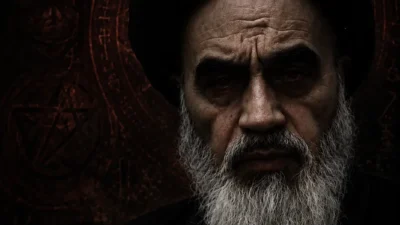
IMAGE: Mīrzā Ḥusayn Ṭabarsī (d. 1902), Shīʿī scholar and author of Faṣl al-Khiṭāb
Other spellings of names in this article: ʿUthmān (Uthman, Usman, Othman); ʿUmar (Umar, Omar); ʿAlī (Ali); Abū Bakr (Abu Bakr, Abu Bakar); Ḥusayn (Husayn, Hussain, Hussein); Ḥasan (Hasan, Hassan); Fāṭima (Fatima, Fatimah); Abī Ṭālib (Abi Talib); Shīʿī (Shia, Shi’a, Shiite); Shīʿism (Shiism, Shi’ism); Ismāʿīlī (Ismaili); Nuṣayrī (Nusayri, Nusairi); ʿAbbāsid (Abbasid); Mahdī (Mahdi).